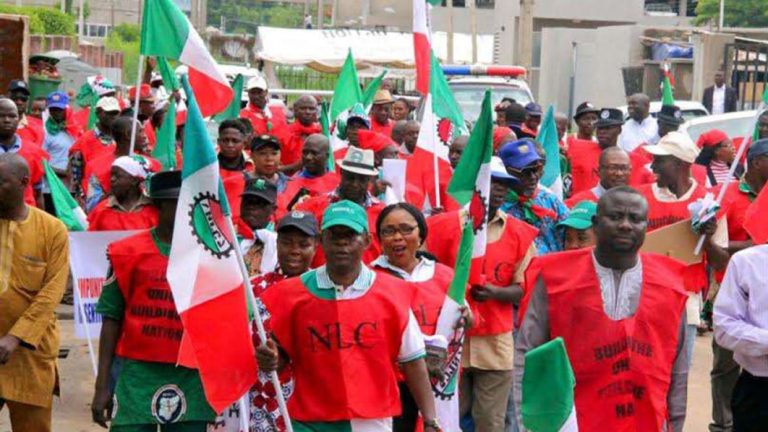
The Obidient Movement has thrown its weight behind the Nigeria Labour Congress in its campaign for a substantial increase in the national minimum wage, warning that millions of workers are being crushed by unrelenting inflation and shrinking purchasing power.
National Coordinator of the Obidient Movement Worldwide, Tanko Yunusa, said the current minimum wage of ₦70,000, set under the 2024 Act, has been overtaken by soaring prices of food, transport and basic services. He urged the Federal Government to adopt the NLC’s proposal for a higher wage floor, reported to be in the region of ₦154,000, as a matter of urgency.
In a statement issued in Abuja, Yunusa described Nigerian workers as “the real heroes of the economy,” arguing that their sacrifices keep the country functioning despite deepening hardship. He said government policies have failed to match workers’ contributions with meaningful protection or support.
Citing the Nigeria Labour Force Survey for the first quarter of 2025, he noted that about 116.6 million Nigerians, or 53.8 per cent of the population, are of working age, with women making up a slight majority. Yet, he said, this vast labour pool has not been matched by job creation or a conducive economic environment.
Yunusa blamed what he called unfavourable economic policies for rising unemployment and a wave of business closures. He referenced data indicating that joblessness has climbed by more than 5 percentage points in recent years, with devastating consequences for households and communities.
According to him, small and medium enterprises, agribusinesses and even multinational firms have either scaled down or shut their doors, squeezed by high operating costs, policy uncertainty and weak consumer demand. He warned that without decisive intervention, more jobs would be lost and poverty would deepen.
Beyond wage increases, the Obidient leader called for a comprehensive package of worker-focused reforms, including safer workplaces, improved security, tax reliefs, health insurance and housing support. He criticised what he sees as a culture of privileging political elites over ordinary workers, citing the allocation of prime residential plots to top officials while long-serving employees struggle to afford decent shelter.
Yunusa also raised alarm over Nigeria’s mounting debt burden, now estimated at over ₦150 trillion, and the large share of the national budget devoted to servicing it. He warned that without better economic management and a stronger social contract with workers, the country’s stability could be at risk.
Despite his concerns, he maintained that a fairer, more prosperous Nigeria is still attainable if the government embraces a living wage and places workers at the centre of economic policy.