When Takesure Nyawo stepped off the crowded bus in Harare with his wife and two young children, he carried little more than a small suitcase and a heavy sense of relief. For the first time in years, he said, he could sleep without wondering whether a knock on the door would mean a beating, an arrest or worse.
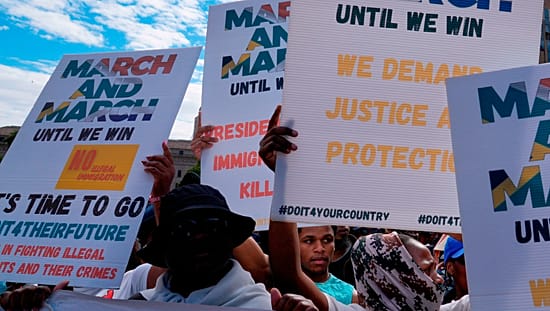
Nyawo had lived in South Africa since 2017, working odd construction jobs in Johannesburg without proper papers. For a long time, he managed to stay under the radar. That changed when small but vocal anti-migrant groups began patrolling neighbourhoods, demanding to see documents and circulating an unofficial deadline for undocumented foreigners to leave the country.
“We heard people were going door to door,” he recalled. “They were saying, if you are not South African and you have no papers, you must go before the end of the month. My neighbours told me not to wait and see what happens.”
Authorities say more than 25,000 foreign nationals have left South Africa in recent weeks, many of them boarding government-organised buses and flights back to Zimbabwe, Malawi, Nigeria, Ghana and Mozambique. The departures followed weeks of marches, looting and targeted attacks that left four migrants dead and pushed thousands more into makeshift camps in Durban, Cape Town and Johannesburg as they waited for transport home.
Police and the National Joint Operational and Intelligence Structure deployed specialised units, including dog teams and helicopters, to contain the unrest and reassure frightened communities. Yet for Nyawo, the visible security presence did little to ease the fear that had seeped into daily life.
“You could feel the anger in taxis, in the queues, even at work,” he said. “People blamed us for crime, for no jobs, for everything. I stopped wearing my work overalls in public because they said foreigners were stealing jobs.”
South Africa has long drawn migrants from across the region, offering better wages and the hope of stability. But with unemployment above 30 percent and a history of xenophobic flare-ups, foreign workers have repeatedly become targets when economic frustrations boil over.
Analysts say the latest vigilante campaigns reflect deeper failures to tackle poverty, inequality and corruption. For Nyawo, those debates feel distant. He is focused on rebuilding a life in Zimbabwe, where work is scarce but, for now, he feels safer.
“I did not leave South Africa because I wanted to,” he said. “I left because I wanted my children to live.”

.jpeg?alt=media&token=96b327a5-8e62-4ed1-a078-308aff149ed1)