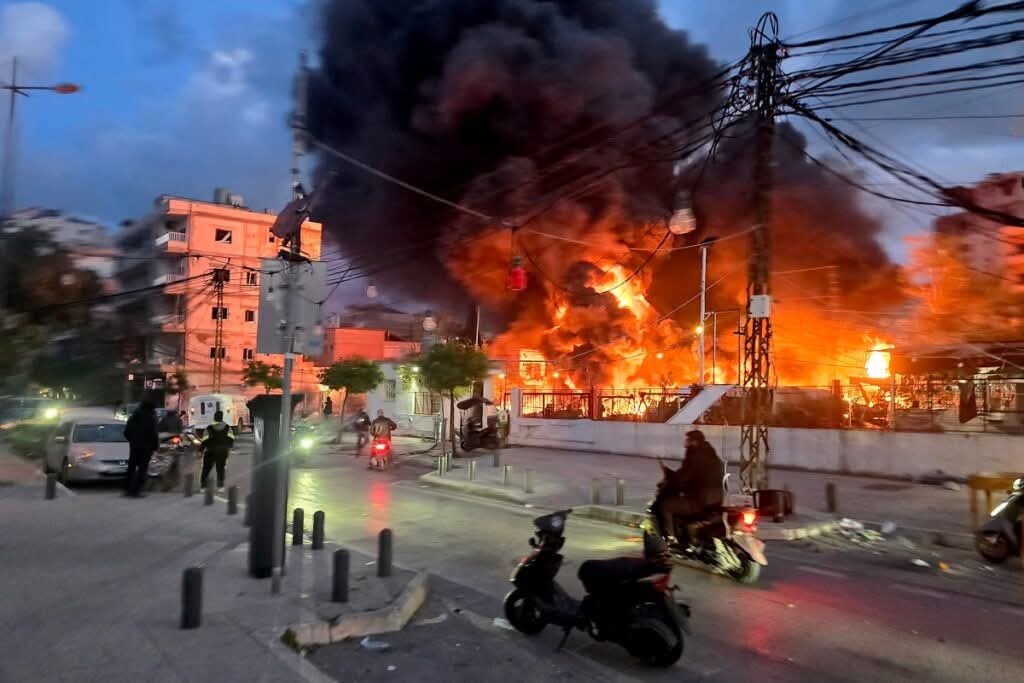
Tehran is grappling with a volatile mix of grief, fear and defiance as authorities postpone the funeral of Supreme Leader Ayatollah Ali Khamenei amid escalating military confrontation with the United States and Israel. The delay, officially attributed to “logistical and security considerations,” comes as Washington signals that its latest strikes on Iranian targets are unlikely to be the last.
U.S. defense officials say a nuclear-powered submarine in the region fired on and sank an Iranian warship in international waters after what Washington described as “hostile maneuvers” by the vessel. The incident marks one of the most direct clashes between the two countries’ militaries in decades and has further inflamed tensions already running high across the Middle East.
Israel has simultaneously expanded its own campaign, targeting positions linked to the Iranian-backed Hezbollah movement in Lebanon. In response, Iranian forces and allied militias have launched missiles and drones at American and Israeli facilities in Bahrain and Kuwait, widening the conflict across the Gulf.
Casualties are mounting. Iranian officials report more than 1,000 dead and thousands wounded in strikes on military and infrastructure sites. Lebanon has recorded dozens of fatalities, while Israel reports a smaller but politically significant death toll. The United Nations estimates that around 100,000 people have fled Tehran in the first days of the fighting, clogging highways out of the capital and overwhelming nearby towns.
Global markets are reeling. Repeated attacks and near-misses on tankers transiting the Strait of Hormuz have driven oil prices sharply higher, reviving fears of a supply shock. Stock exchanges from Asia to Europe have slumped on concerns that a prolonged confrontation could tip fragile economies into recession.
In Washington, the spiraling conflict has triggered a fierce political battle. The U.S. Senate is preparing to vote on a war powers resolution that would require explicit congressional authorization for further large-scale military action against Iran. The measure, mirrored by a bill in the House, faces stiff resistance from Republican leaders and would likely be vetoed by the White House even if it passed.
Regional diplomacy is faltering. Arab League Secretary-General Ahmed Aboul Gheit has condemned Iran’s cross-border attacks as a “strategic mistake” and urged Tehran to halt its strikes on Gulf neighbors, warning that the region is sliding into an “unprecedented state of hostility” with no clear off-ramp.