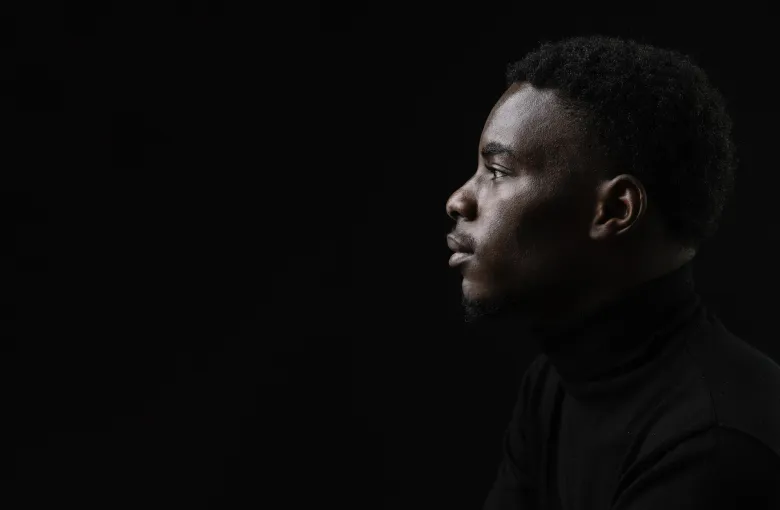
You can see a broken arm.
You can see a cut.
You can see a bruise.
And because you can see the injury, you immediately understand that something is wrong.
But what happens when the wound is inside?
What happens when someone is hurting, but there is nothing visible to point to?
They can smile.
They can work.
They can laugh.
They can attend church.
They can take care of their children.
They can post beautiful pictures.
And still be carrying a wound nobody can see.
That is the frightening thing about emotional pain.
It can hide extremely well.
Sometimes the person who looks the happiest is struggling privately.
Sometimes the person who gives the best advice is the person who has no idea how to apply that advice to themselves.
Sometimes the person who keeps saying,
"Everything will be okay,"
is saying it because they desperately need to believe it themselves.
Invisible wounds are dangerous because people often do not receive support for them.
And sometimes, they do not even recognize them in themselves.
A person may say,
"I am just tired."
But underneath the tiredness is grief.
Another may say,
"I just do not trust people."
But underneath the distrust is betrayal.
Someone else may say,
"I am just independent."
But underneath that independence is years of disappointment.
Another person may say,
"I do not need relationships."
But underneath the distance is fear of being abandoned.
The wound hides behind the behaviour.
And because nobody sees the wound, they judge the behaviour.
"You are too difficult."
"You are too sensitive."
"You are too distant."
"You think too much."
"You are too emotional."
Sometimes what looks like a personality problem is actually pain asking for attention.
This does not mean every unhealthy behaviour should be excused.
Healing does not mean saying,
"I was hurt, so I can hurt people."
No.
Our pain may explain our behaviour, but it does not give us permission to harm others.
Instead, understanding the wound gives us an opportunity to change the pattern.
Think about anger.
People often see anger and stop there.
But anger can sometimes be the emotion sitting on top of something deeper.
Underneath anger may be hurt.
Fear.
Grief.
Powerlessness.
Rejection.
A person who constantly becomes angry may not know how to say,
"That really hurt me."
So they become defensive instead.
Or consider emotional numbness.
Someone may appear cold.
Unbothered.
Disconnected.
But numbness can sometimes be the mind's way of protecting itself from emotions that once felt too overwhelming.
When you have been hurting for a long time, feeling nothing can seem safer than feeling everything.
That is why healing requires us to look beneath the surface.
Instead of asking only,
"What is this person doing?"
We can also ask,
"What might be happening underneath?"
And we need to offer ourselves that same compassion.
When you notice a pattern in yourself, do not immediately attack yourself.
Get curious.
Why do I panic when people pull away?
Why do I struggle to ask for help?
Why do I become uncomfortable when someone loves me consistently?
Why do I feel guilty when I rest?
Why do I constantly need reassurance?
Why do I shut down during conflict?
The answers may lead you to places you have avoided for years.
And that is okay.
You do not have to uncover everything at once.
Healing is not an excavation project where you must dig up your entire past in one afternoon.
Go slowly.
Be gentle.
Get support when you need it.
Talk to someone safe.
Journal.
Pray.
Seek professional help when the weight becomes too heavy to carry alone.
Most importantly, stop being ashamed of wounds simply because they cannot be seen.
A person with an invisible wound still deserves care.
You do too.
Maybe nobody understands why you react the way you do.
Maybe even you do not fully understand yourself yet.
That does not mean you are broken.
It means there may be a story underneath the behaviour.
And stories can be understood.
Patterns can be changed.
Wounds can be cared for.
Healing can happen.
So if you are carrying something invisible today, I hope you remember this:
You do not have to bleed visibly before your pain becomes valid.
You do not have to fall apart publicly before you deserve help.
You do not have to prove that you are struggling.
Your heart knows what it has carried.
And perhaps your healing journey begins when you stop hiding the wound from yourself.
Because sometimes the first person who needs to acknowledge your pain...
is you.

5