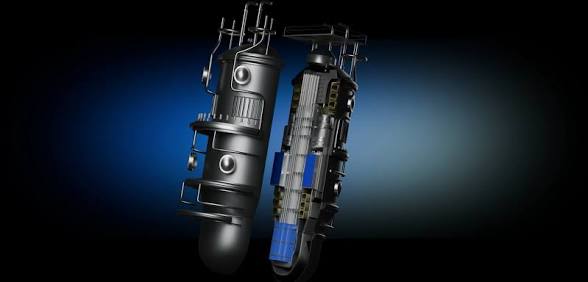
The race to reinvent nuclear power has largely focused on radical new reactor designs. Apollo Atomics is betting the real breakthrough lies in a far less glamorous corner of the plant: the steam generator.
Instead of redesigning the reactor core, founders Assil Halimi and Drew Walker are rethinking how heat from the reactor is turned into electricity. Their premise is simple but sweeping. If you can dramatically shrink and standardize the steam generator, you can shrink the entire plant, slash construction time and cost, and finally make nuclear competitive with fossil fuels.
In a conventional nuclear plant, the steam generator is a hulking, custom-built structure that can stretch several stories high. It transfers heat from the reactor’s coolant loop into water that flashes into steam and spins a turbine. The design lineage traces back to coal and gas plants, which were never optimized for nuclear’s far higher energy density.
Apollo’s generator takes a different approach. Instead of routing coolant through large tubes bathed in water, the company uses a compact metal block etched with hair-thin channels. Both the reactor coolant and the water that becomes steam are threaded through this dense maze, dramatically increasing the surface area for heat transfer. More efficient heat exchange means the hardware can be much smaller.
The result, Apollo says, is a steam generator about the size of a person that can be mass-produced in factories rather than hand-built on site. That compact core allows the entire reactor system to shrink by a factor of 40 compared with plants using traditional generators.
Factory assembly is central to the company’s economic pitch. By shipping nearly complete reactor modules to a site, Apollo expects to cut labor costs and construction timelines, targeting less than 24 months to build a 300-megawatt power plant. Halimi projects that the reactor itself could cost four to five times less to produce than existing designs, enabling electricity at roughly 3 cents per kilowatt-hour, a level aimed squarely at undercutting natural gas.
The concept is not purely theoretical. Apollo has already built a 40-kilowatt demonstration reactor at MIT and plans a product line ranging from 10 to 300 megawatts. Backed by a $26 million seed round, the company is positioning its shrunken steam generator as the missing link between nuclear’s promise and its stubbornly high price tag.