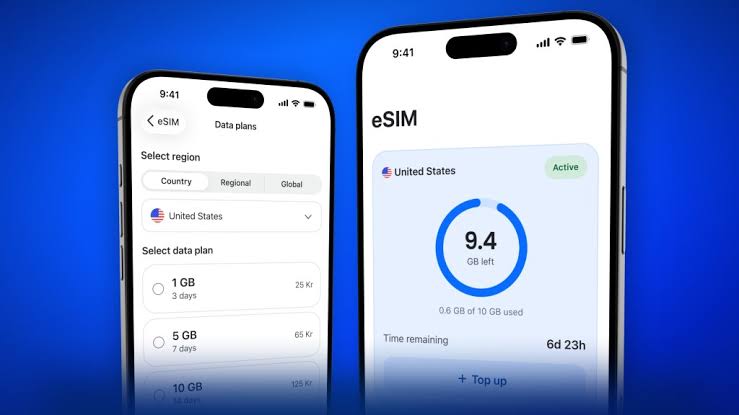
Caller ID specialist Truecaller is moving beyond its core identity and spam-blocking service, launching a travel-focused eSIM offering as it searches for new revenue streams amid weakening advertising income.
The company is rolling out digital SIM plans that range from 1 GB over 7 days to 20 GB over 30 days, targeting frequent travelers who want to avoid traditional roaming charges. At launch, the service will be available in 29 countries across Europe, North America, Africa, Asia, and Oceania, including major markets such as the United States, the United Kingdom, Canada, Australia, Germany, France, Spain, Italy, South Africa, Egypt, and Nigeria.
Conspicuously absent is India, Truecaller’s largest market. Industry observers point to the country’s stringent telecom rules and recent crackdowns on third-party travel eSIM providers as a likely reason. Authorities have previously restricted services like Airalo and Holafly over concerns about fraud and regulatory compliance, making India a difficult first stop for new eSIM ventures.
To power the new product, Truecaller is partnering with global connectivity provider Telna and telecom software firm Telness Tech. The company is entering a crowded field that already includes Airalo, Holafly, Roamless, and NordVPN’s Saily, but it is betting that distribution will be its edge.
Truecaller’s app has more than 500 million users, many of whom rely on it daily to screen calls and messages. By embedding travel eSIM purchasing and management directly into this existing app, the company hopes to bypass the customer acquisition challenges that younger eSIM startups face and to compete aggressively on pricing.
Executives frame the move as both defensive and strategic. Advertising, historically a key pillar of Truecaller’s business, has come under pressure, dragging down net sales and prompting job cuts. In response, the company has been pushing harder into subscriptions, with products such as AI-powered call handling and family safety tools. eSIMs add another subscription-friendly service that can be sold to a global audience without heavy infrastructure investment.
The broader eSIM market is expanding quickly as more smartphones ship with embedded SIM support and travelers grow comfortable managing connectivity digitally. Investors have poured capital into eSIM startups worldwide, betting that the shift away from physical SIM cards will create a new class of telecom intermediaries. With its new travel eSIM offering, Truecaller is positioning itself to be one of them.