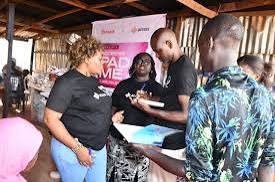
Baobab Microfinance Bank has completed the first phase of its Menstrual Hygiene Awareness Project in Ilorin, Kwara State, targeting adolescent girls with practical support and education on menstrual health.
The initiative was carried out in partnership with Sisters of Jannah, a local grassroots organisation, and focused on a public school identified as having a high number of girls affected by period poverty. During the outreach, 500 reusable sanitary pads were distributed to students, alongside sensitisation sessions on menstrual hygiene, body awareness and self-esteem.
Period poverty remains a major barrier to girls’ education in Nigeria, where many students rely on improvised materials or stay home during their menstrual cycle. By providing reusable pads produced by Sana Pads, a female-owned enterprise based in Kano, the project aims to offer a sustainable solution that can be used for several years, reducing both financial pressure on families and waste associated with disposable products.
Baobab Microfinance Bank’s Chief Business Development Officer, Joy Micheal-Oti, said the project is part of a broader effort to remove non-financial barriers that keep girls out of school. She explained that the bank views menstrual health as a basic right and a prerequisite for equal participation in education, adding that the Ilorin intervention is intended as a model for similar programmes in other states.
The bank’s Social Performance Manager, Barisi Samuels, noted that the outreach combined product distribution with conversations about dignity and confidence. According to her, many of the girls had never received structured guidance on menstrual care and were relieved to ask questions in a safe, supportive environment. She described the experience as a reminder that small, targeted interventions can have a lasting impact on how young people see themselves and their future.
Sisters of Jannah played a central role in mobilising the school and ensuring that the most vulnerable students were prioritised. Representative Mistura Afolabi said the group’s long-standing presence in the community helped them identify girls who routinely miss classes due to lack of sanitary products. She emphasised that partnerships between financial institutions and community organisations can bridge gaps that neither could close alone.
The menstrual hygiene project forms part of Baobab’s wider corporate social responsibility agenda, which focuses on financial inclusion and social development in underserved communities. With dozens of branches across multiple states, the bank says it plans to replicate the Ilorin model in other locations, expanding both the number of beneficiary schools and the range of health and education initiatives offered.