Freedom After Fifty-Six Days: Agenda-Setting, Framing, and the Politics of Rescue in Nigeria’s Oyo School Kidnapping
By Salima Usman Sani
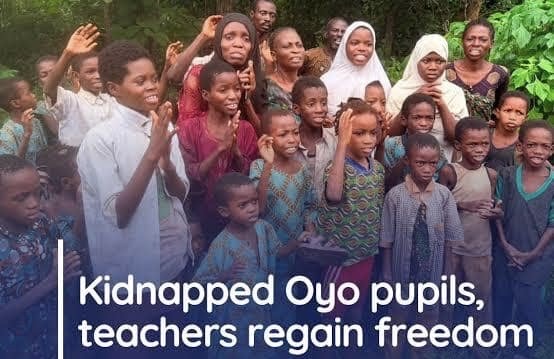
The rescue of schoolchildren and teachers abducted from three schools in Oriire Local Government Area of Oyo State after fifty-six days in captivity marked a significant security milestone in Nigeria. Announced by the presidency on July 10, 2026, the operation ended a crisis that had drawn national attention and raised fresh concerns about the spread of school kidnappings beyond Nigeria’s northern regions.
From a mass communication perspective, the Oriire case illustrates the relevance of agenda-setting and framing theories. McCombs and Shaw’s agenda-setting theory explains how sustained media attention kept school insecurity at the forefront of public discourse throughout the victims’ captivity. Continuous reports on the abduction, school closures, protests, and rescue efforts reinforced the issue’s salience.
Entman’s framing theory further reveals how official and media narratives largely adopted a “rescue triumph” frame, emphasizing the success of security agencies while giving less attention to structural questions such as inadequate school protection, delayed rescue efforts, and the deaths of two teachers. Although the victims’ safe return deserved celebration, journalism also has a responsibility to interrogate the systemic failures that enabled the attack.
The coverage also reflects Galtung’s distinction between war journalism and peace journalism. Initial reports relied heavily on official government and military statements, with limited representation of survivors, families, and local communities. A more people-centred approach would have provided deeper insight into the human cost of the crisis and encouraged discussion of long-term solutions to school insecurity.
Ultimately, the Oriire kidnapping demonstrates that responsible journalism extends beyond reporting successful rescues. By sustaining attention on accountability, prevention, and the experiences of affected communities, the media can contribute meaningfully to public understanding and policy discussions on Nigeria’s growing insecurity.
This version is approximately 300 words, retains the key theories (agenda-setting, framing, and peace journalism), and is suitable for a newspaper opinion page, academic magazine, or university publication.