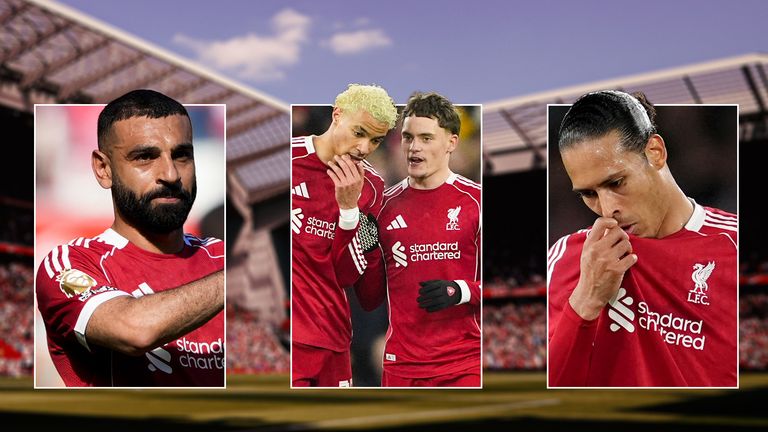
Arne Slot’s dismissal was less a shock than an inevitability. Liverpool’s hierarchy, initially reluctant to move on from a recent title-winning coach, eventually reached the same conclusion as the supporters: persisting with a manager they no longer trusted would have been the greater gamble.
Slot’s first season, crowned by a Premier League triumph, had seemed to justify the club’s decision to pivot from the Jurgen Klopp era with evolution rather than revolution. His tweaks to the pressing structure and possession play extracted more from the squad Klopp left behind and even coaxed a late flourish from Mohamed Salah. But the subsequent collapse, culminating in Liverpool’s lowest points total in a decade, shattered the illusion of steady progress.
Context offers mitigation but not absolution. The emotional shock of Diogo Jota’s death, the disruption of a lavish but disjointed recruitment drive, and the drawn-out Salah contract saga all weighed heavily. Big-money arrivals such as Alexander Isak and Florian Wirtz failed to replace the incision of Luis Diaz. Slot, though, never found convincing solutions. His public briefings, heavy on explanations about injuries, referees and scheduling, began to sound like a catalogue of excuses rather than a roadmap out of trouble.
Supporters, and increasingly players, sensed standards slipping. The football grew slower, more sterile, a long way from the “heavy metal” identity that had defined Liverpool at their peak. Salah’s pointed call for a return to that aggressive, front-foot style crystallised the mood. The club could not risk drifting into another season with a manager whose vision no longer aligned with Anfield’s expectations.
Enter Andoni Iraola, the bold, if hazardous, corrective. At Bournemouth, his teams have embodied the kind of intensity Liverpool fans crave. They press high, sprint relentlessly and attack with direct purpose. Statistical markers underline the fit: Bournemouth have led the league in sprints and direct attacks under Iraola, precisely the areas where Liverpool regressed under Slot.
Yet this is no risk-free appointment. Iraola has never managed a club with Liverpool’s profile or schedule. His high-octane style has been tested over 40-game seasons, not the 55-plus grind that comes with Champions League commitments and deep domestic runs. The question is whether his approach can survive, or be smartly adapted, under that strain.
Still, for Liverpool’s decision-makers, the calculation is clear. Returning to a more ferocious, proactive identity, even under a relatively unproven coach, feels less perilous than persisting with a model that had drained belief from the stands and the dressing room. Iraola represents risk. Allowing Slot to continue looked like stagnation.