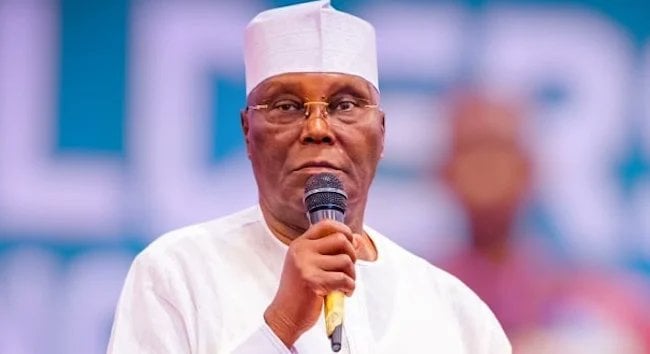
During the 17th Annual Founder’s Day celebration at the American University of Nigeria, former Vice President Atiku Abubakar has boldly pointed fingers at the government’s neglect of the education sector as the root cause of Nigeria's escalating insecurity. Speaking in Yola, Atiku didn’t hold back his concerns, claiming that the nation is spiraling into chaos due to a long-standing disregard for education.
Atiku stated, “The crass disregard for education inflicted upon us by the current and successive governments since 2007 has transformed what could have been a vibrant future into a bleak landscape.” His strong words reflect a growing frustration among citizens who feel abandoned by the state. Atiku argues that while the public remains transfixed on violent crimes perpetrated by armed groups, the real danger lies in the silent, systemic decay of education, health, and human development services across the nation.
He warned that the consequences of this neglect are dire and extend far beyond immediate security threats. “As we confront violence and turmoil from armed groups, we must recognize that the consequences of neglecting human development sectors do not just threaten the present , they wreak havoc on the future,” he cautioned, implying that the government is not just failing today’s citizens but also the generations to come.
Atiku urged the private sector and individuals alike to get involved, stressing that Nigeria’s youth, who should be the country's greatest asset, are instead being groomed for criminal activities due to lack of opportunity. “Our beloved country, endowed with a youth population of enormous promise, faces staggering challenges that threaten to undermine our most precious asset , our children,” he lamented, painting a grim picture of lost potential.
With millions of children out of school and many who do enroll feeling trapped in an outdated system, Atiku claimed Nigeria holds the “regrettable title” of the highest number of out-of-school children globally. “While the security threats we face today may seem daunting, they pale in comparison to what awaits us because of our criminal neglect of education,” he added, making it clear that this crisis demands immediate action.
In a scathing critique of the federal government’s allocation of over $23 billion to infrastructure projects, Atiku deemed such decisions as a “grievous misallocation of priorities.” He argued that this blatant disregard for the pressing need for educational reform highlights an embarrassing disconnect between what the country needs and what the government is willing to provide. “Their dogged pursuit reveals a troubling allegiance to the insatiable greed of those in authority,” he asserted, fueling speculation about corruption and mismanagement of resources.
Echoing Atiku’s alarming sentiments, Professor Muhammadou Kah, the guest speaker, highlighted the American University of Nigeria’s role as a beacon of hope for Africa's future leaders. He made a compelling case that no nation can truly progress without quality education, dubbing it the compass for human and infrastructural development. Kah encouraged students to utilize the university’s advanced facilities to prepare for their future roles as leaders.
Dr. Dewayne Frazier, the President of AUN, assured attendees that the university remains dedicated to its founding vision, a reassuring statement amidst the chaos surrounding Nigeria's education system. The event garnered attention from notable figures, including former Adamawa State Governor Jibrilla Bindow and Senator Ben Obi, underscoring the urgency of the situation.
As the discourse around education intensifies, it’s evident that the demand for urgent reforms in Nigeria’s education sector is not just a talking point but a necessity. The future of Nigeria is at stake, and unless significant action is taken, the nation risks dooming its youth to a life devoid of opportunities and hope.