We grew up hearing that Africa is rich in resources. Gold, oil, diamonds, fertile land, brilliant minds. It sounded like something to be proud of and it is. But at some point, that statement stopped being inspiring and started becoming suspicious.
Because how can a continent so rich remain home to so many struggling people?
The truth is uncomfortable: our problem is no longer potential. It is leadership, structure, and accountability.
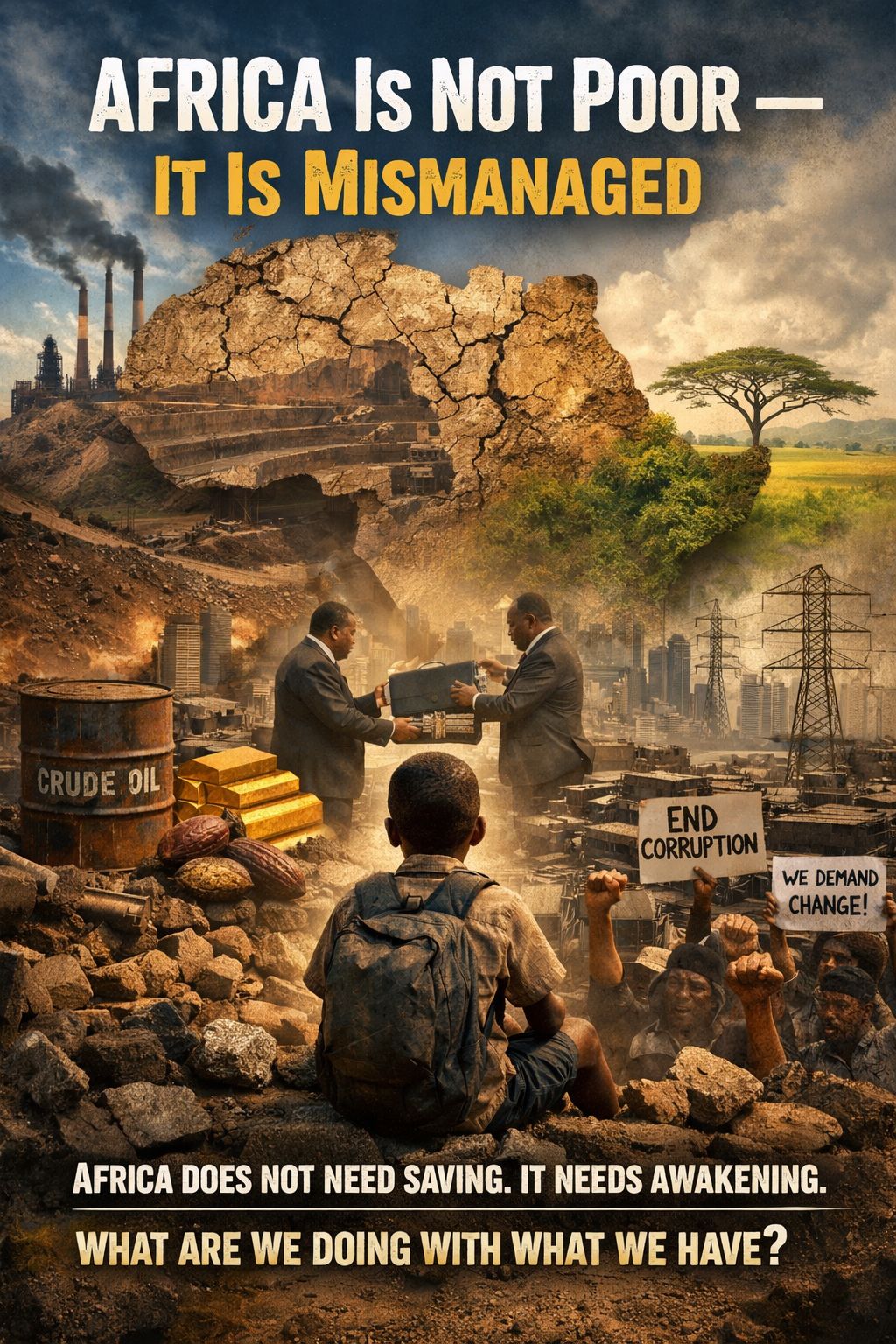
We export crude and import refined fuel.
We harvest raw cocoa and import expensive chocolate.
We have sunlight all year round, yet live in darkness.
We have youth full of ideas, yet systems that frustrate innovation.
This is not a resource problem. It is a thinking problem.
And yes, government must be called out. Too many policies are designed without vision. Too many leaders act without consequence. Too many decisions benefit a few while the majority survive on hope. Corruption is not just stealing money, it is stealing the future.
But here’s the harder truth: we cannot blame government alone.
A broken system survives when people adapt to it instead of challenging it. When silence becomes normal. When survival replaces ambition. When we accept “this is Africa” as an excuse instead of a call to action.
We have normalized dysfunction.
The tragedy is not just wasted resources it is wasted belief. A generation slowly convinced that things cannot change.
But history has shown something different: no nation develops by accident. It happens when people demand better, build better, and refuse to settle.
Africa does not need saving. It needs awakening.
The question is no longer what do we have?
The real question is what are we doing with what we have?
At some point, we must stop waiting for change and start becoming part of it.
This is the wake-up call.
Because if we don’t rise to fix what is broken, we will keep inheriting the same problems just in different forms.