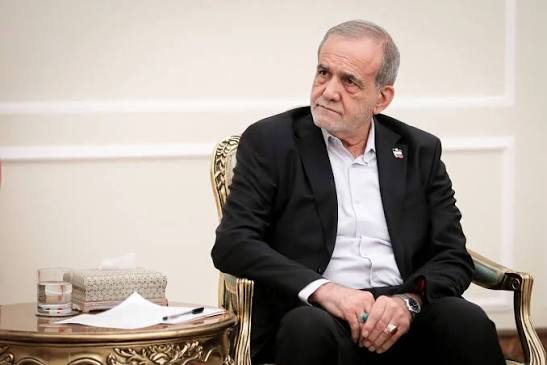
Iran’s President Masoud Pezeshkian has reiterated that the Islamic republic is not pursuing nuclear weapons, as Iranian and US negotiators head into critical talks in Switzerland mediated by Oman, amid a sweeping American military buildup across the region.
Speaking ahead of the talks, Pezeshkian invoked the authority of Iran’s supreme leader, Ayatollah Ali Khamenei, whose religious decree has long been cited by Tehran as a prohibition on nuclear arms. “Our Supreme Leader has already stated that we will not have nuclear weapons at all,” the president said, insisting Iran’s nuclear programme is strictly civilian.
Washington, however, remains unconvinced. In a recent State of the Union address, US President Donald Trump accused Tehran of “pursuing sinister nuclear ambitions” and warned that failure to reach an agreement could trigger American military action. The United States has surged forces and hardware into the region in what officials describe as a deterrent posture but which Iranian officials see as coercive pressure.
The agenda for the Swiss talks is itself contested. Iran insists discussions must focus solely on its nuclear activities under international monitoring. The US side is pushing for a broader deal that would also curb Iran’s ballistic missile programme and its support for armed groups across the Middle East. Secretary of State Marco Rubio has called Tehran’s refusal to negotiate over missiles “a big, big problem”, even as he stresses that “the president wants diplomatic solutions”.
Vice President JD Vance has delivered a blunter message, urging Iran to take Trump’s threats “seriously” and arguing that Washington has a “right” to use force to prevent what he called “the craziest and worst regime in the world” from acquiring nuclear arms.
Iranian Foreign Minister Abbas Araghchi, leading Tehran’s delegation, has described the negotiations as “a historic opportunity” and said a deal is “within reach” if the United States shows consistency and seriousness. The US team is led by envoy Steve Witkoff and senior adviser Jared Kushner.
The talks come after a year of acute tension: a mass crackdown on nationwide protests inside Iran, a brief but intense war triggered by Israeli strikes on Iranian targets, and repeated US warnings that time for diplomacy is running out. Regional analysts such as Emile Hokayem say governments across the Middle East “expect a war” if the Swiss channel fails.
In Tehran, public opinion is split between fear of conflict and frustration with the status quo. Some residents voice dread of famine and further hardship; others say that if war is inevitable, it might at least bring clarity to an uncertain future.