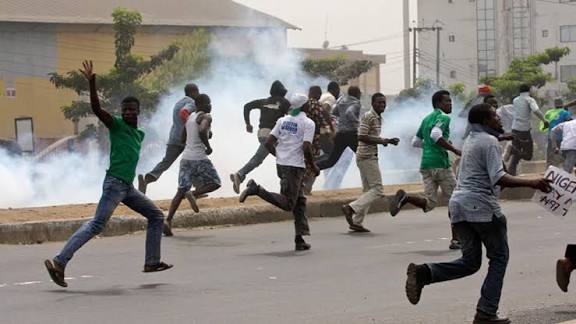
Nigeria today is not merely battling isolated security challenges; it is confronting a layered crisis that touches nearly every part of national life. In many communities, insecurity has moved from being an occasional disruption to a permanent condition. Fear has become routine. Caution has replaced confidence. And for millions of Nigerians, safety now feels like a privilege rather than a right.
The facts are unsettling. Over the past several years, insecurity-related violence has claimed hundreds of thousands of lives across the country, with credible estimates placing the figure above 600,000 deaths within a relatively short period. Millions more have been displaced from their homes or forced to live under the constant threat of abduction. These numbers are not abstract; they represent parents who never returned home, children forced to grow up too fast, and communities emptied of hope.
What makes Nigeria’s insecurity particularly troubling is its complexity. It is not driven by one single conflict but by several overlapping ones. In the North-West, banditry and kidnapping have evolved into a sophisticated criminal economy, where human lives are reduced to ransom figures.
In the North-East, insurgent groups like Boko Haram and its affiliates continue to attack civilians and security forces, refusing to fully disappear despite years of military operations. Across the Middle Belt, clashes between farmers and herders fuelled by climate pressure, land scarcity, and weak mediation have turned once-peaceful farmlands into killing fields.
Meanwhile, urban centres are not spared. Armed robbery, cult violence, and organized crime have eroded the sense of safety even in cities once considered secure.
The human cost goes far beyond body counts. Entire communities have been displaced, living in camps or overcrowded urban spaces with little access to education, healthcare, or dignity.
Thousands of schools have shut their doors at different times due to fear of mass abductions, robbing a generation of children of learning and stability. Farmers abandon their land to avoid attacks, deepening food insecurity and driving up the cost of living.
Over time, mistrust grows between neighbours, between ethnic groups, and between citizens and the state.
At the heart of this crisis lie deeper structural problems. Weak governance and overstretched security institutions struggle to respond swiftly or decisively.
High unemployment, especially among young people, creates a pool of vulnerable recruits for criminal and extremist groups. Porous borders allow the steady flow of illegal arms, while justice systems that move slowly or not at all fail to deter violence. In such an environment, insecurity feeds on itself, becoming harder to contain with each passing year.
There have been moments of progress. Security forces have recorded tactical victories, rescued hostages, and dismantled some criminal networks.
Yet these gains often feel temporary, unable to translate into lasting peace for ordinary Nigerians. The reality on the ground suggests that guns alone cannot fix a problem rooted in inequality, neglect, and broken trust.
Nigeria now stands at a defining crossroads. Insecurity is no longer just a policy issue or a campaign talking point; it is a daily lived experience for millions. When people cannot travel freely, farm safely, or sleep without fear, national development becomes an illusion.
Addressing insecurity requires more than force it demands leadership, accountability, economic opportunity, and a renewed social contract between the state and its citizens.
Until that happens, insecurity will continue to shadow Nigeria’s future, not just threatening lives, but quietly eroding the nation’s soul.