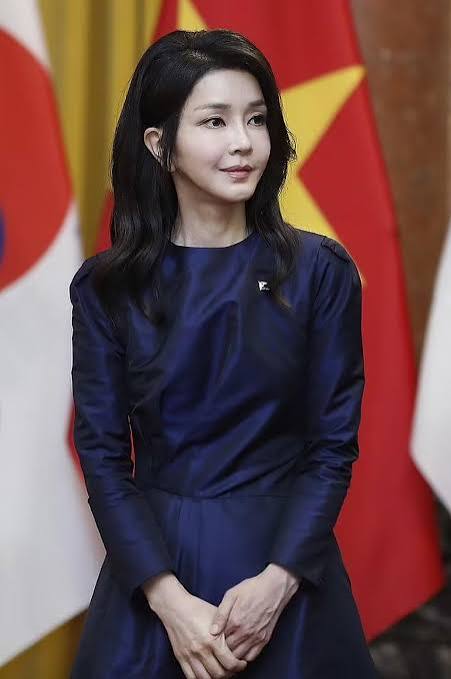
South Korea’s former first lady Kim Keon Hee has been sentenced to 20 months in prison after a Seoul court found she accepted expensive gifts from the Unification Church, a controversial religious movement often described by critics as cult-like.
The ruling caps years of allegations that Kim exploited her proximity to power during the presidency of her husband, Yoon Suk Yeol, whose own downfall in a martial law scandal has plunged the country into a deep political crisis. Both are now behind bars, symbolising a dramatic collapse of a onetime conservative power couple.
Judge Woo In-sung of the Seoul Central District Court ruled that Kim used the “significant influence” that came with her position as first lady to solicit and accept bribes. The court found that she received luxury items including a Chanel handbag and a Graff necklace from figures linked to the Unification Church, which has long sought political access in South Korea.
Prosecutors had demanded a 15-year sentence, accusing Kim of standing “above the law” and helping blur the constitutionally mandated line between religion and the state. They also charged her with stock manipulation and campaign finance violations, but the court acquitted her on those counts, resulting in a far shorter prison term than they sought.
Kim, dressed in a black suit and wearing a white mask and glasses, listened impassively as the verdict was read. In a written statement released afterward, she apologised for the “concern” caused and said she accepted the court’s “stern criticism,” while her lawyers indicated she had not yet decided whether to appeal.
The case has widened into a broader reckoning over the Unification Church’s political reach. Its leader, Han Hak-ja, has been arrested in connection with the probe, and the court also sentenced former church official Yun Young-ho to 14 months in prison for providing luxury gifts to Kim and illegal political funds to a lawmaker.
Opposition lawmaker Kweon Seong-dong, a close ally of ex-president Yoon, received a two-year jail term for taking 100 million won in illicit donations from the church, underscoring how deeply the sect had penetrated the country’s political establishment.
Kim still faces two additional trials, including allegations that she orchestrated the mass enrolment of more than 2,400 Unification Church followers into Yoon’s conservative People Power Party, a case that could further reshape South Korea’s already shaken political landscape.
.jpeg?alt=media&token=96b327a5-8e62-4ed1-a078-308aff149ed1)