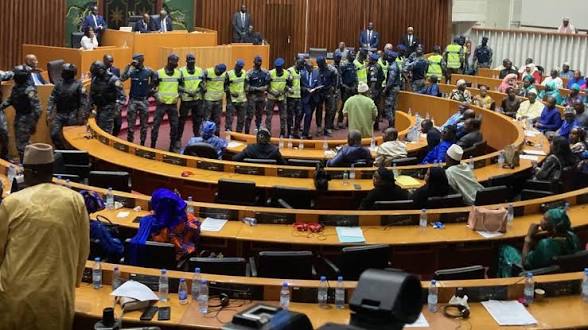
Senegal’s National Assembly has approved a far‑reaching constitutional reform that would significantly reduce the powers of the presidency and strengthen the role of parliament, setting the stage for a national referendum on the country’s political future.
The amendment, championed by the Pastef party of former prime minister Ousmane Sonko, was adopted after a tense and often heated debate. Sonko, recently removed as prime minister and now president of the National Assembly, is seen by opponents as the driving force behind the overhaul, which they describe as an attempt to sideline President Bassirou Diomaye Faye.
The reform package touches the core of Senegal’s semi‑presidential system. It would tighten the conditions under which the head of state can dissolve the National Assembly, restrict executive decisions in the sensitive period between a presidential vote and the official proclamation of results, and bar any president from simultaneously leading a political party. Supporters argue these measures will reduce hyper‑presidentialism and prevent incumbents from using state resources to entrench their power.
Parliament’s prerogatives would expand markedly. The government would be obliged to inform lawmakers of all agreements related to the exploitation of natural resources, a key issue in a country preparing to ramp up oil and gas production. Parliamentary inquiry committees would gain broader investigative powers, giving legislators greater oversight of the executive and public finances.
A central pillar of the reform is the replacement of the existing Constitutional Council with a new Constitutional Court composed of nine judges instead of seven. Advocates say the change will modernise Senegal’s system of constitutional review and provide stronger guarantees of judicial independence, particularly in electoral disputes and challenges to executive authority.
Outside the Assembly, the vote unfolded amid confrontation. Responding to calls from opposition parties and civil society groups, demonstrators massed near the parliament building, brandishing signs and chanting “Hands off my Constitution!” Police used tear gas to disperse the crowds and arrested several opposition figures and activists, deepening concerns about political polarisation.
The government has pledged to submit the reform to a popular referendum, framing the package as a democratic opportunity for citizens to redefine the balance of power. It has not yet announced a date, leaving Senegalese voters waiting to decide whether the presidency should be permanently cut down to size.