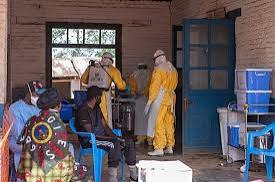
A landmark clinical trial has begun in Ituri province in the Democratic Republic of Congo, offering new hope against a deadly outbreak of the Bundibugyo strain of Ebola, one of the rarest and least understood forms of the virus.
The World Health Organization is coordinating the study, which is testing two experimental therapies: the monoclonal antibody MBP134 and the antiviral drug remdesivir. Both will be assessed alone and in combination, in an effort to determine whether pairing them can boost survival rates.
Health officials say the stakes are high. The Bundibugyo strain has driven a severe outbreak in northeastern DRC, with more than a thousand confirmed infections and hundreds of deaths. Although some patients are recovering with intensive supportive care, the case fatality rate remains about one in three.
Under the trial design, patients who consent to participate are randomly assigned to one of four groups: remdesivir only, MBP134 only, both drugs together, or standard optimized supportive care. Researchers will compare outcomes across the groups to see which approach offers the greatest protection against death and severe complications.
WHO experts say the trial will initially run in a single treatment centre in Ituri before expanding to additional facilities as logistics and security allow. The study could involve more than 1,000 patients, depending on how effective the drugs prove to be. Supplies of both MBP134 and remdesivir are already in place for up to 1,200 participants.
Alongside the scientific effort, the trial is unfolding in a region scarred by years of conflict and deep mistrust of authorities. Ebola responders face regular security incidents, including attacks on treatment centres that have killed health workers, scattered patients and destroyed vital infrastructure.
To counter suspicion, community leaders are being invited into treatment units to observe care, question medical teams and relay information back to their neighbourhoods. Health officials argue that without local support, even the most promising therapies cannot be delivered safely or at scale.
Despite the challenges, WHO leaders insist that ensuring access to any treatment proven safe and effective is central to the response. They say that while people are already surviving Ebola with supportive care alone, the addition of targeted therapeutics could dramatically increase the number of lives saved in Ituri and beyond.