Armed conflicts reached their highest level in the modern era in 2025, with new research warning that the world has entered a sustained period of instability marked by overlapping wars and unprecedented attacks on civilians.
The Peace Research Institute Oslo’s latest Conflict Trends report records 65 state-based conflicts worldwide, the most since systematic monitoring began after World War II. Eight of these were wars between states, a level not seen in decades and double the number registered the previous year.
Those interstate clashes ranged from long-running flashpoints between India and Pakistan and along the Afghanistan–Pakistan border to confrontations between Cambodia and Thailand. They also included Russia’s full-scale war in Ukraine and Israeli military operations on Syrian territory, underscoring how regional disputes are increasingly entangled with wider geopolitical rivalries.
Researchers describe the picture as both alarming and historically unusual. Around 245,000 people were killed in fighting or political violence, making it one of the deadliest years since the end of the Cold War. Strikingly, nearly a third of those deaths came from deliberate attacks on civilians: about 76,500 people, up from roughly 14,200 the year before.
The surge is driven in large part by the war in Sudan, where brutal sieges and massacres in and around El-Fasher in Darfur are estimated to have claimed some 60,000 lives. Only the 1994 genocide in Rwanda and the 2021 war in Ethiopia’s Tigray region have produced higher single-year death tolls in the post-Cold War period.
Africa remains the most conflict-affected continent, with 29 state-based conflicts, followed by Asia, then the Middle East, the Americas and Europe. Analysts note that violence is no longer concentrated in one or two theatres but spread across multiple regions at once, leaving little room for global conflict levels to recede.
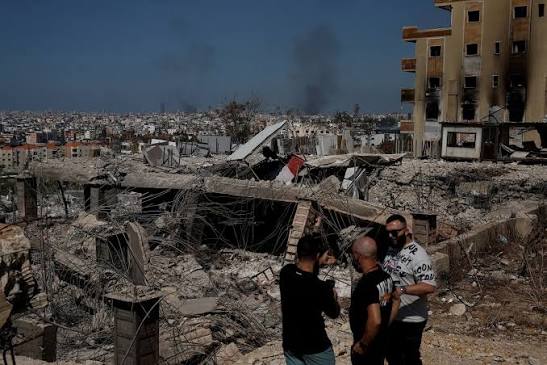
The report links this pattern to intensifying geopolitical tensions and weakening international cooperation. It highlights ongoing hostilities involving Israel in Gaza, Syria and Lebanon, as well as clashes with Iran and Houthi forces, alongside rising political polarization and trade disputes that complicate crisis management.
International institutions, the study argues, are struggling to cope with several major emergencies simultaneously. With conflicts becoming more numerous, more interconnected and deadlier for civilians, the authors warn that without renewed diplomacy and stronger multilateral action, the world risks settling into a prolonged era of recurring wars and humanitarian catastrophes.