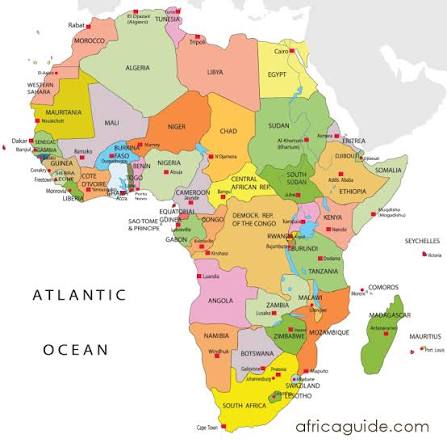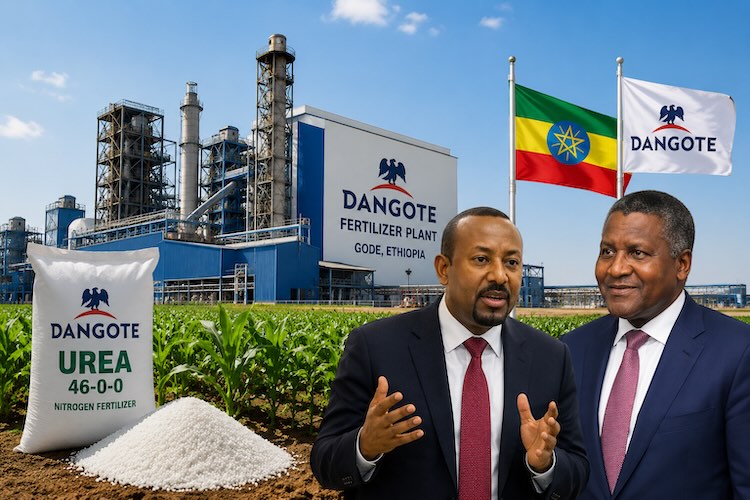
Nigerian industrialist Aliko Dangote has pledged deeper investment in Ethiopia as his conglomerate advances plans for a massive urea fertiliser complex in the country’s Somali region, a project Addis Ababa is casting as pivotal to its food security strategy.
The plant, to be built near Gode, stems from an initial 2.5 billion dollar agreement between the Ethiopian government and the Dangote Group. Designed to produce about 3 million metric tonnes of urea a year, it would be one of the largest such facilities in Africa, supplying both domestic farmers and neighbouring markets in the Horn and East Africa.
Officials say the project is central to Ethiopia’s ambition to end chronic fertiliser shortages that have long constrained yields in a largely agrarian economy. By replacing costly imports with local production, the government hopes to stabilise input prices, expand access for smallholder farmers and reduce pressure on foreign currency reserves.
Prime Minister Abiy Ahmed has framed the initiative as a cornerstone of his administration’s push to link industrial investment with agricultural transformation. He has described food security as a strategic intervention and said the partnership with Dangote reflects a shared vision of using large-scale manufacturing to underpin rural livelihoods.
Dangote Group says its total commitment in Ethiopia now exceeds 4 billion dollars, after factoring in associated infrastructure for the fertiliser project. The wider package includes a 110 kilometre pipeline to move feedstock, a 120 megawatt power plant to guarantee reliable energy, a polypropylene packaging facility and a two million tonne NPK blending plant to produce customised fertiliser mixes.
The company already operates a major cement plant in Ethiopia and now counts the country as its second largest investment destination on the continent. Aliko Dangote has said the scale of the new fertiliser venture underscores his confidence in Ethiopia’s long term growth prospects and its role as a regional hub.
Analysts note that if completed on schedule and run efficiently, the Gode complex could significantly narrow the fertiliser gap in Ethiopia and beyond, supporting higher crop productivity and helping buffer the region against climate and market shocks. For Addis Ababa, the project is also a test of its ability to attract and retain large industrial investors while delivering tangible gains for farmers.