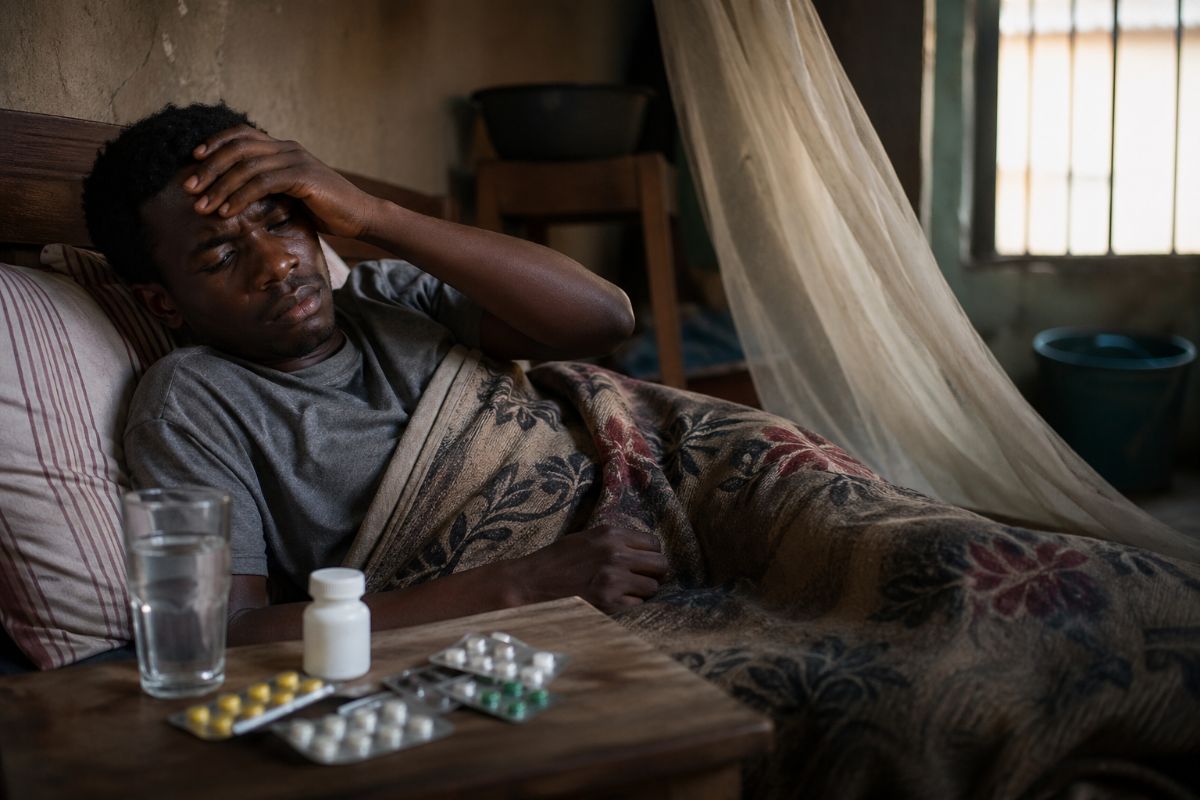
It started like every other “normal” fever.
I remember that Monday morning in Lagos, the heat, the rush, the danfo horns blaring like nothing in the world could slow them down. I had woken up feeling weak, but in Nigeria, weakness is not enough excuse to stop life. So I dragged myself up, convinced it was just stress.
By noon, the chills began.
“Probably Malaria,” my colleague said casually, like he was diagnosing a common cold. In Nigeria, malaria is almost a default explanation for any fever. I nodded, stopped by a pharmacy on my way home, and got the usual drugs no test, no questions.
But this time, it didn’t go away.
Three days passed. The fever got worse. My body felt like it was carrying weights. The headaches became unbearable, and then came the vomiting. That’s when fear started creeping in.
At the hospital, after what felt like endless waiting, the doctor insisted on tests. I was irritated, why waste money when we all “knew” it was malaria?
The results came back.
It wasn’t malaria.
It was a severe case of typhoid, worsened by days of wrong medication and delay. The doctor looked at me and said something that stuck:
“Many Nigerians treat symptoms, not diseases. That’s how small problems become dangerous.”
Lying on that hospital bed, weak and hooked to a drip, I kept thinking, how many people had done exactly what I did? How many had ignored their bodies because life didn’t pause for illness? How many had taken the wrong drugs, trusting assumptions over diagnosis?
In Nigeria, healthcare isn’t just about hospitals, it’s about habits. Self-medication. Delayed checkups. Enduring pain until it becomes unbearable.
I got better, eventually.
But I didn’t leave that hospital the same person.
Now, whenever I feel something off, I don’t guess—I check. Because I learned the hard way that in a country where survival already feels like a daily battle, ignoring your health is a risk you can’t afford.
Sometimes, the real illness isn’t just the disease.
It’s the way we choose to deal with it.