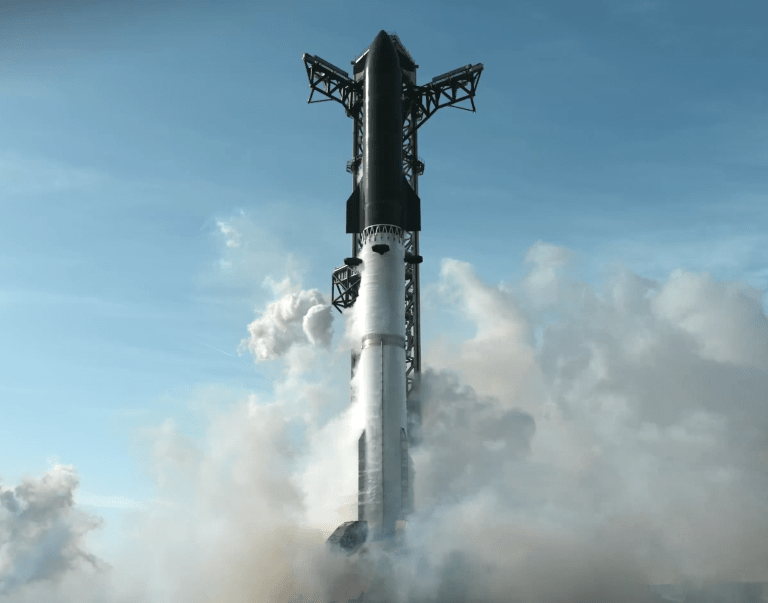
SpaceX has postponed the second launch attempt of its upgraded Starship rocket after the mission was automatically aborted just seconds before liftoff at the company's Starbase facility in South Texas.
The launch was halted after several engines failed to ignite as expected. SpaceX CEO Elon Musk confirmed on X that the automatic abort system was triggered because some of the engines did not start.
"Some of the engines didn't start, triggering an automatic launch abort," Musk wrote, adding that two engines would be replaced before the next attempt. He said the company does not expect to launch Starship again until next week.
The mission was expected to carry the first batch of SpaceX's third-generation Starlink satellites. However, the satellites were only intended for a short demonstration flight and were expected to burn up about 20 minutes after deployment because Starship has yet to complete a successful orbital mission.
The attempted launch was SpaceX's first Starship mission since the company went public on June 12 in what was described as the largest initial public offering (IPO) in history. The company raised more than $85 billion, although its share price has declined steadily since then.
On Thursday, SpaceX shares closed below their IPO price of $135 before falling by more than four percent in after-hours trading following the aborted launch.
The company was also aiming to return to flight after the first test of Starship Version 3 in May. While that mission successfully lifted off and deployed Starlink simulator payloads, it experienced technical problems during flight.
The Super Heavy booster failed before completing its planned splashdown in the Gulf of Mexico, prompting a Federal Aviation Administration (FAA) investigation. Earlier this week, the FAA cleared SpaceX to resume Starship flights after the company implemented several corrective measures.
During the same May mission, the Starship upper stage also lost one of its engines before deploying the simulator payloads. Despite the issue, the spacecraft successfully completed a simulated landing over water.
Thursday's mission was expected to mark another milestone by carrying upgraded V3 Starlink satellites, which are central to SpaceX's long-term plans to expand its satellite internet network and develop the concept of orbital data centres.
The countdown progressed normally, apart from a brief hold at one minute before launch. Once the countdown resumed, the launch pad's water suppression system activated and the Super Heavy booster began its ignition sequence.
However, the launch was aborted almost immediately after ignition when several of the new Raptor engines failed to start. Broadcast graphics indicated that four engines did not ignite as expected.
Engineers will now drain the propellant from both the Super Heavy booster and the Starship upper stage before carrying out a detailed investigation to determine the cause of the failure ahead of the next launch attempt.