CONT
By Jaiyeoba Testimony Anike/300level Mass Communication UNILAG
GMOs in Africa
In many conversations about GMOs, Africa is often left out. The loudest opinions usually come from places far removed from the daily reality of farming here. But across the continent, farmers are paying close attention to genetically modified crops, not because of trends or debates, but because of survival.
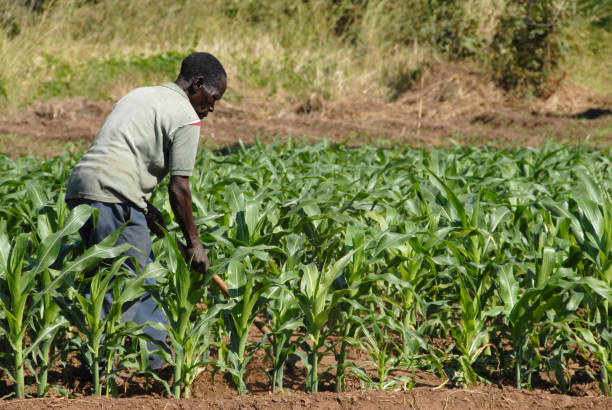
Farming in Africa is not easy. Many farmers depend on rainfall that is no longer predictable. Pests destroy crops faster than before. Soil quality changes. When crops fail, the impact goes beyond money. It affects food, education, and entire communities.
For these farmers, the question is not whether GMOs sound scary or modern. The question is whether crops will survive the season.
This is where GMOs enter the conversation in a very practical way.
Some genetically modified crops are designed to resist pests that commonly destroy harvests. Others are created to grow better under harsh weather conditions. For a farmer who has watched the same crop fail year after year, this kind of support matters.
In countries across Africa, including Nigeria, food security is a major concern. As populations grow, the demand for food increases. At the same time, farmland does not magically expand. Farmers are expected to produce more with less, often under tougher conditions. GMOs are being explored as one of several tools to help meet this challenge.
It is important to say this clearly. GMOs are not a magic solution. They do not replace good farming practices, government support, or fair policies. But for some farmers, they offer an option where few exist.
Another reason African farmers are paying attention is control. For a long time, Africa has relied heavily on imported food and farming solutions. Learning how to grow stronger crops locally, even with modern technology, can reduce that dependence. It opens conversations about self-sufficiency and long-term planning.
What makes the African GMO conversation different is context. In many Western countries, food is abundant and farming is heavily mechanized. Fear around GMOs often comes from choice. In many African communities, the issue is access. Access to food. Access to stable harvests. Access to a future where farming is not a constant gamble.
This does not mean everyone supports GMOs. There are still questions, concerns, and debates, and those are valid. But framing the topic only as a global controversy misses the local reality.
For African farmers, GMOs are not just a scientific idea. They are part of a bigger conversation about feeding families, surviving climate changes, and keeping agriculture alive.
Understanding this shift helps us see GMOs not as a foreign issue, but as a local one shaped by real needs. And that perspective is essential if we want to talk about food, science, and communication honestly.