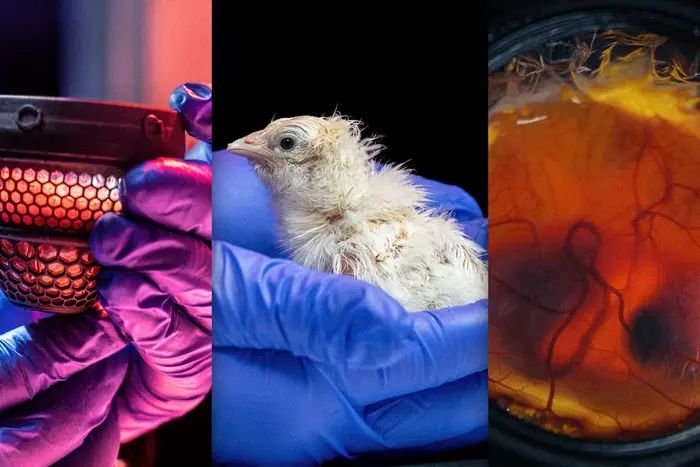
Colossal Biosciences says it has reached a major milestone in its de-extinction and conservation research after successfully hatching 26 healthy chicks using a fully artificial egg system for the first time.
The US-based biotechnology company Colossal Biosciences claims the experiment demonstrates that bird embryos can develop entirely outside a natural shell, with scientists monitoring every stage of growth from embryo formation to hatching.
The system is designed to replicate the key functions of a real egg, including oxygen exchange and stable developmental conditions. According to the company, it combines titanium structures with specially engineered silicone membranes that mimic how natural eggs sustain growing embryos. Researchers say this setup even improves oxygen transfer compared to conventional chicken eggs.
Colossal CEO Ben Lamm said the team was able to successfully hatch 26 chicks during testing, describing the approach as an effort to “re-engineer” natural reproductive processes rather than simply replicate them. The chicks are reportedly healthy and being raised at the company’s avian research facility.
The breakthrough is being positioned as a potential tool for both conservation and de-extinction efforts. Colossal argues that the technology could improve hatch rates in endangered bird species and eventually support attempts to bring back extinct species such as the dodo and the giant moa.
The moa, which once stood up to 13 feet tall, presents a unique challenge because no living bird is large enough to naturally incubate its eggs. To address this, the company is exploring artificial incubation systems instead of biological surrogates.
The moa revival project is being developed in collaboration with the Ngāi Tahu Research Centre and filmmaker Peter Jackson, with researchers suggesting that initial work could also benefit conservation efforts in New Zealand.
Colossal has also made progress on its dodo-related research, including advances in avian germ cell development, which it says could accelerate future reproduction work for extinct birds.
While the company projects that a dodo could potentially be revived within the next few years and a moa in the 2030s, these timelines remain speculative and depend on significant further scientific validation.
For now, researchers say the artificial egg platform represents an important step in developing an “avian reproductive toolkit” that could be used for both wildlife conservation and long-term de-extinction research.