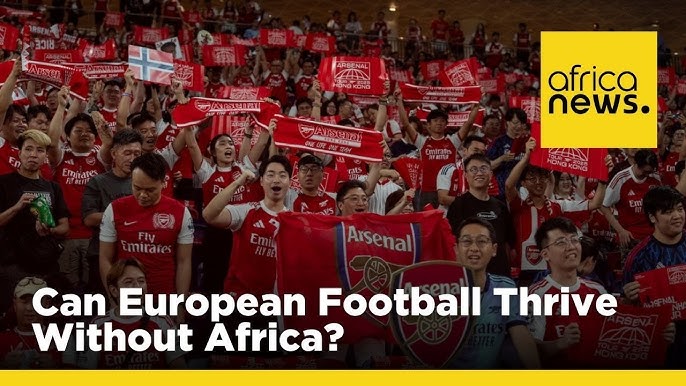
When Arsenal finally ended a 22-year title drought by winning the Premier League, the loudest roars were not only at the Emirates Stadium. In Nairobi, Kampala and Lagos, streets turned into rivers of red and white as fans danced behind car caravans, set off fireworks and packed makeshift viewing centres late into the night.
This outpouring of emotion has reignited a pointed question across the continent: does Europe need African football fans more than Africa needs European football
The bond runs deeper than simple entertainment. For many African supporters, Arsenal became a vessel of representation during the Arsène Wenger years, when players like Nwankwo Kanu, Kolo Touré and Emmanuel Adebayor were central figures. Seeing African stars dominate on English pitches offered a powerful sense of belonging.
The Lagos-based sports journalist Blessing Fowowe recalls that his allegiance began the moment he saw players who looked like him in Arsenal colours. That experience is echoed from Accra to Addis Ababa, where fans often choose clubs based on the African heroes who passed through them: Michael Essien at Chelsea, Didier Drogba at Marseille and Chelsea, or Victor Wanyama at Tottenham.
Yet this passion comes at a cost for African football itself. European leagues command prime television slots, sophisticated marketing and global sponsorships that hoover up attention and money. Local stadiums, by contrast, are frequently half-empty, their games overshadowed by the latest Premier League kickoff.
Analysts point to a “visibility crisis” in domestic competitions. Poor infrastructure, erratic scheduling, limited broadcasting quality and governance problems make it hard for African leagues to compete with the polished spectacle from Europe. Young fans grow up knowing every statistic about Manchester United or Real Madrid, but little about clubs in their own cities.
Cameroonian sports editor Philemon Mbale argues that this imbalance is rooted in colonial and neo-colonial legacies. In many former British and French territories, he says, European leagues are still treated as the cultural benchmark. Supporting an English club can feel like aspiring to a lifestyle that remains out of reach at home.
Meanwhile, Europe’s top leagues increasingly rely on African audiences for growth. Broadcasters and sponsors court millions of viewers from Lagos to Luanda, where subscriptions, merchandise and betting revenues feed a lucrative ecosystem.
Whether that relationship can be rebalanced may depend on whether African football can turn its own immense passion inward, building leagues that command the same devotion currently reserved for distant clubs.