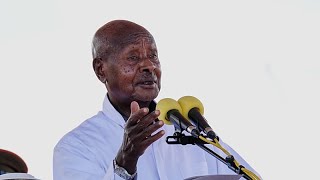
Uganda’s President Yoweri Kaguta Museveni has signed into law a sweeping “Protection of Sovereignty” act that criminalizes what authorities describe as foreign interference in the country’s political and policy space, deepening a long-running confrontation between the government and its critics.
The legislation targets individuals and organizations accused of advancing “foreign interests” at the expense of Uganda’s national priorities. It introduces penalties of up to 10 years in prison and gives the state broad powers to scrutinize funding sources, partnerships and advocacy campaigns, particularly those involving international donors and NGOs.
The law also prohibits implementing or developing policies without prior government approval, a provision lawyers say could place civil society groups, research institutions and even private-sector associations under tighter state control. Analysts note that the measure formalizes Museveni’s frequent accusations that opposition parties and non-governmental organizations are being used as conduits for external agendas aimed at destabilizing the country.
Rights organizations, media advocates and business leaders warn the law could have far-reaching consequences. They argue that its language is vague enough to criminalize routine advocacy, investigative journalism and corporate lobbying, especially when these activities challenge official positions or expose corruption.
Human Rights Watch has criticized the act as echoing restrictive legislation in Russia and other authoritarian-leaning states, saying its broad definitions of “foreign influence” and “external funding” could be used to silence virtually any critic deemed inconvenient by the authorities.
Within Uganda’s political establishment, the law has not gone unchallenged. Former deputy attorney general and finance minister Mwesigwa Rukutana described the bill as widely unpopular across social and professional groups. He urged the government to reopen consultations, warning that the measure in its current form is “toxic” and should be substantially revised or abandoned.
Civil society leaders fear the law will accelerate an already shrinking civic space, following years of tightened regulations on NGOs, media outlets and opposition parties. Some warn that international partners may reconsider aid and investment if they perceive the environment as hostile to transparency and independent oversight.
Government officials, however, insist the law is necessary to safeguard Uganda’s sovereignty, arguing that genuine development and democracy must be driven by domestic priorities rather than external pressure.
.jpeg?alt=media&token=96b327a5-8e62-4ed1-a078-308aff149ed1)