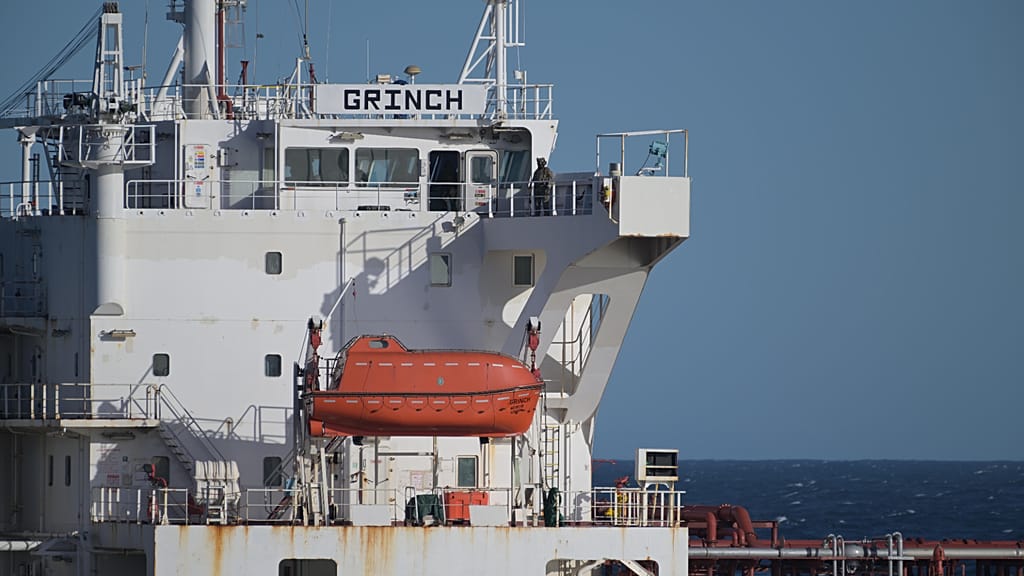
France’s navy has intercepted a suspected “shadow fleet” oil tanker in the Mediterranean Sea, in one of the most visible European moves yet to enforce sanctions on Russian energy exports.
The vessel, known by the nickname Grinch, had departed from Russia and was sailing under what officials suspect is a false flag, a common tactic used to disguise a ship’s true ownership and destination. Acting on intelligence shared by the United Kingdom, a French warship moved in to halt the tanker and is now escorting it to port for detailed inspections.
French authorities say the operation is part of a broader campaign to disrupt a clandestine network of tankers that has emerged since Western nations imposed sweeping sanctions on Moscow over its invasion of Ukraine. This so called shadow fleet is believed by maritime analysts to comprise roughly 400 vessels, many of them decades old and operating with opaque ownership structures.
These ships are often registered in jurisdictions with limited transparency, using shell companies and flags of convenience to obscure links to Russian interests. They frequently disable tracking systems, conduct ship to ship transfers at sea and alter paperwork to conceal the origin of their cargoes, allowing Russian oil to reach global markets despite price caps and embargoes.
Oil exports remain a cornerstone of Russia’s economy, providing crucial revenue that helps finance President Vladimir Putin’s war effort and support the ruble. Western governments argue that curbing the shadow fleet is essential to reducing Moscow’s income while avoiding a shock to global energy supplies.
France has positioned itself at the forefront of European enforcement efforts, joining partners in tightening surveillance of high risk tankers transiting key chokepoints such as the Mediterranean and the Atlantic approaches. Naval patrols, satellite monitoring and closer coordination with allies are being used to identify ships suspected of sanction evasion.
Maritime security experts warn that the growth of the shadow fleet not only undermines sanctions but also poses environmental and safety risks. Many of the vessels are aging, underinsured and operating with minimal oversight, raising fears of spills or accidents in busy sea lanes.
French officials say the interception of the Grinch is intended as a signal that Europe is prepared to move from rhetoric to action in policing the sanctions regime, and that tankers attempting to hide their ties to Russia will face increasing scrutiny at sea.