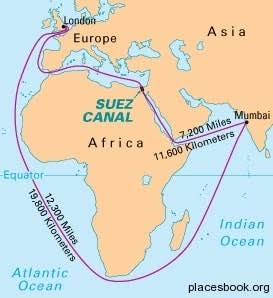
Major container lines are beginning to steer some vessels back through the Suez Canal, signaling a cautious shift in global shipping patterns after years of costly detours around Africa’s Cape of Good Hope.
The rerouting of traffic away from the Red Sea and the Bab el-Mandeb Strait began after attacks on commercial vessels linked to Israel and its allies. In response, shipping companies diverted thousands of ships around the southern tip of Africa, adding significant distance and as much as two weeks to typical Asia–Europe voyages.
The longer journeys strained global supply chains, tightened vessel capacity and drove up freight rates on key trade lanes. Importers and exporters faced higher costs and longer delivery times, while insurers raised premiums for any ship still transiting the high-risk Red Sea corridor.
With tensions in the region showing signs of easing, some of the world’s largest carriers are now testing a partial return. Danish group A.P. Moller Maersk has announced that its AE15 service, operated under the Gemini Cooperation with German line Hapag-Lloyd, will once again sail via the Suez Canal instead of rounding the Cape of Good Hope.
The AE15 loop links major ports in Asia with hubs in the Mediterranean and northern Europe, making it a critical artery for containerized trade between manufacturing centers and consumer markets. According to Hapag-Lloyd, restoring the Suez passage on this route could shorten overall transit times by up to four weeks on certain rotations, a substantial gain for time-sensitive cargo.
Maersk said the decision followed a comprehensive assessment of security conditions in the Red Sea and described the move as a step toward a gradual return to the canal, rather than a full-scale reversal of earlier precautions. Both Maersk and Hapag-Lloyd emphasized that they retain contingency plans to divert ships again if the threat level rises.
For now, the rest of the Gemini network will continue to follow existing routings, reflecting the industry’s lingering caution. Executives say any broader shift back to the Red Sea will depend on sustained stability and the absence of renewed attacks on commercial shipping.
Before the crisis, the Suez Canal handled roughly a tenth of global seaborne trade, making it one of the world’s most important chokepoints. Even a partial restoration of traffic through the waterway is being closely watched by manufacturers, retailers and policymakers looking for relief from elevated logistics costs.