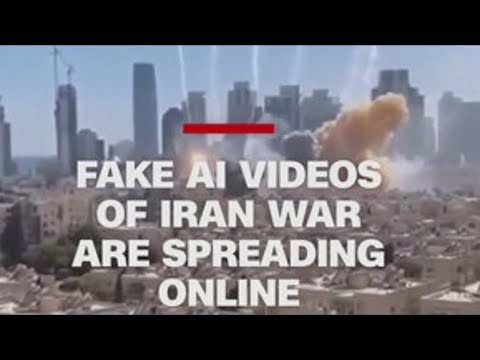
When War Goes Viral: How Fake Videos Are Spreading in the Iran–Israel–US Conflict
War today is not only fought with missiles and soldiers. It is also fought with information. As tensions rise between Iran, Israel, and the United States, social media has become another battlefield.
On platforms like TikTok, X (Twitter), Facebook and Instagram, thousands of videos claim to show missile attacks, destroyed cities, or military victories. However, many of these videos are not real. Some are created with artificial intelligence, while others are old clips posted again with misleading captions.
Fake War Videos Are Everywhere
During the recent tensions in the Middle East, many videos started circulating online showing dramatic explosions and air strikes. Some of them claimed to show Iran attacking Israel or Israel launching strikes in Iran.
Later, fact-checkers discovered that several of these videos were not real footage from the current conflict.
For example, some clips that went viral were actually taken from video games or military simulations. The graphics looked so realistic that many viewers believed they were real war footage.
In other cases, people shared old videos from previous conflicts, but added new captions claiming they were recent attacks.
One viral video showing a massive explosion was shared millions of times online. Many people believed it showed a recent missile strike. But investigators later discovered the clip was actually from an industrial explosion that happened years earlier in another country.
AI Is Making Fake Content Easier to Create
Artificial intelligence has made it easier for people to create convincing fake videos. With modern AI tools, someone can generate images of missile launches, burning buildings, or military equipment within minutes.
These videos often look real at first glance. Smoke, fire, and night-time explosions can easily be simulated by AI, especially when the clips are short.
Because of this, fake content can spread very quickly before journalists and fact-checking organisations are able to verify it.
Social Media Makes It Spread Faster
Social media platforms also play a role in how quickly these videos spread.
Algorithms on platforms like TikTok or X (Twitter) tend to promote content that gets strong reactions. Videos showing explosions, panic, or destruction often attract millions of views within hours.
When people see dramatic footage, many share it immediately without checking if it is real. This helps misinformation spread even faster.
Sometimes the videos are shared to gain attention or followers. In other cases, they may be used as propaganda to make one side of a conflict appear stronger than the other.
The Problem for Journalists and the Public
For journalists, this situation creates a serious challenge. News organisations must verify images and videos before publishing them, but fake content spreads online much faster than professional reporting.
For ordinary people, it also becomes difficult to know what to believe. When viewers see many different videos claiming different things, confusion quickly grows.
Another problem is that some people begin to doubt real footage as well. When fake videos become common, even genuine evidence may be questioned.
Why Media Literacy Is Important
Experts say one of the best ways to fight misinformation is through media literacy. People need to learn how to question what they see online.
Before sharing a dramatic video, it is important to:
- Check if reliable news organisations have reported the same event
- Look at when and where the video was originally posted
- Be careful with accounts that share shocking news without evidence
In a world where anyone can create realistic images with artificial intelligence, being careful about what we believe has become more important than ever.
A New Kind of War
In the past, wars were mainly fought on land, sea, and air. Today, they are also fought through screens and smartphones.
The conflict between Iran, Israel and the United States shows how quickly misinformation can spread during global crises.
In the age of social media and artificial intelligence, the fight for truth has become almost as important as the fight on the battlefield.
By JUBRIL AMINAH AMMUSA
A student of @Dr.Olunifesi Suraj
REFERENCES
https://www.aap.com.au/factcheck/fake-footage-of-us-iran-war-floods-social-media/?
https://www.wired.com/story/fake-ai-content-about-the-iran-war-is-all-over-x/?
https://www.euronews.com/my-europe/2026/03/06/did-you-spot-these-fake-videos-about-the-iran-war?