Published by: Iyoke Sunday Paschal
Date: 05/09/2025
Introduction
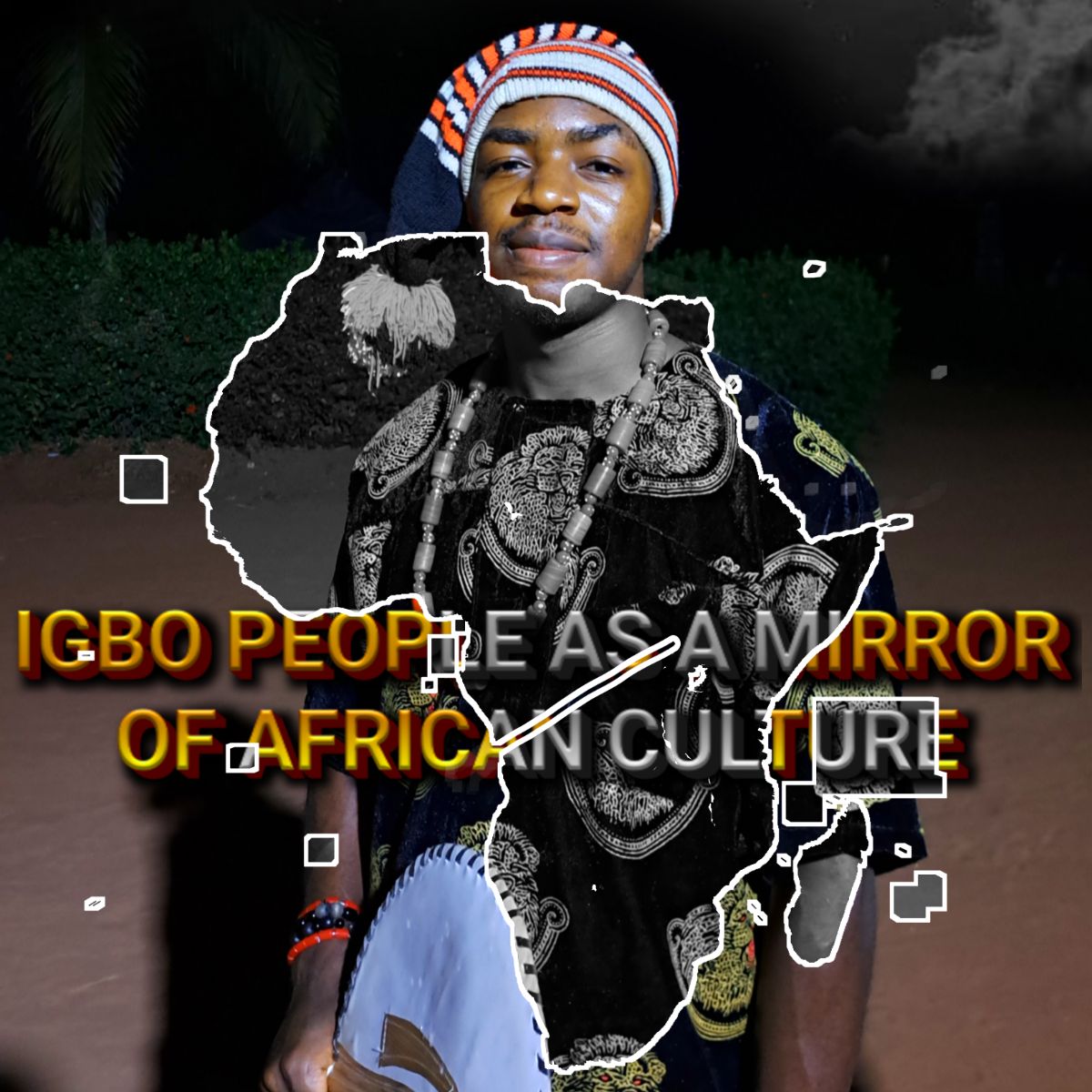
Among the many ethnic groups that make up the African continent, the Igbo of southeastern Nigeria stand out as a people whose culture, worldview, and philosophy embody the essence of what it means to be African. To speak of the Igbo is to tell a story not only of one group but of Africa itself—its values of community, spirituality, resilience, creativity, and human dignity. The Igbo worldview does not exist in isolation; rather, it is part of the great African tapestry, where the shared threads of kinship, respect for elders, reverence for the ancestors, attachment to land, and celebration of life are woven together.
African culture is not written merely in books; it is lived through proverbs, songs, dances, festivals, and daily interaction. The Igbo, like their African brothers and sisters across the continent, understand that “onye kwe, chi ya ekwe”—a person’s destiny responds when he himself agrees to pursue it. In this way, the Igbo spirit reflects the larger African spirit of self-determination and harmony with both the seen and unseen worlds.
This essay, told in the form of cultural storytelling, explores how the Igbo embody the shared African values of kinship, spirituality, land, marriage, respect for elders, art, entrepreneurship, and justice.
Community and Kinship
At the heart of Igbo life is the family, which stretches beyond the nuclear unit to the extended family and the umunna (kindred). This is the same across Africa, where the saying “it takes a village to raise a child” rings true. For the Igbo, no man exists alone. To be human is to be in community. When a child is born, it is not only the parents who celebrate; the entire village rejoices, for the child belongs to all.
The umunna governs many aspects of life—land ownership, marriage approval, settlement of disputes. In wider African culture, the extended family plays this same role of social security, ensuring that no one is abandoned. The Igbo proverb says: “Igwe bu ike”—there is strength in numbers. This is a truth also found among the Akan of Ghana, the Zulu of South Africa, and countless other African peoples who see collective unity as the pillar of survival.
The age-grade system (ogbo) further strengthens the sense of belonging. Young men of the same age group grow, work, and serve together, carrying out community projects like road clearing, building halls, or enforcing discipline. This reflects the African value of communal labor and youth responsibility. In the wisdom of the elders: “Nwata bulie nna ya elu, o na-atu onwe ya anya”—when a child lifts his father high, he is raising himself as well.
Religion and Spirituality
Religion is at the core of African life, and the Igbo are no exception. Before the coming of Christianity, the Igbo believed in Chukwu, the supreme God, alongside lesser deities (alusi) and the veneration of ancestors. This mirrors the African worldview that the divine is one but manifests in many forms.
African spirituality emphasizes balance—the harmony between the living, the dead, and the unborn. Among the Igbo, ancestors (ndi ichie) remain active members of the community, blessing or warning the living through dreams, rituals, or misfortunes. This reflects the African value of continuity, where death is not an end but a transition. As the proverb says: “Ihe onye metara, ya buru”—whatever a man does, he carries the consequences.
Across Africa, whether among the Yoruba with their Orisha, the Ashanti with their Abosom, or the Shona with their Mwari, the principle remains the same: human life is guided by the divine, and misfortune is often a sign of disharmony with spiritual forces. The Igbo use kola nut rituals, libations, and festivals to restore balance.
Agriculture and Land...
To be continued @OKpanku Nani on Facebook. Follow and share.