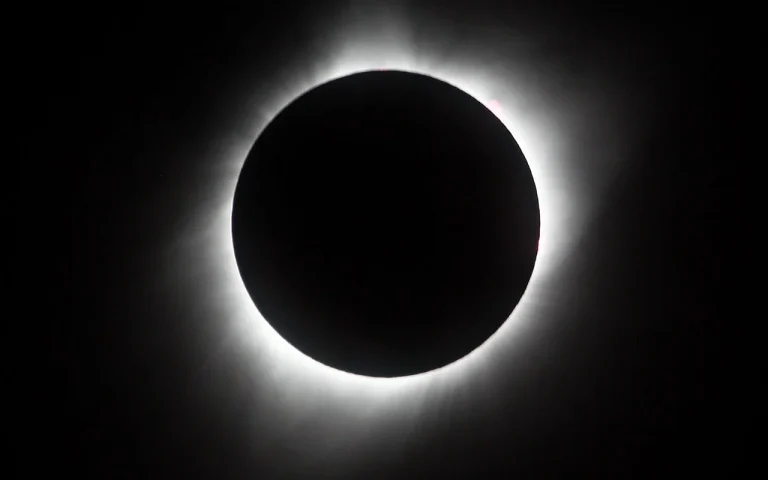
Day will briefly turn into night across a swathe of northern Spain on August 12, when the Moon completely covers the Sun during a rare total solar eclipse. The event will be the first total eclipse visible from mainland Europe in nearly two decades and is expected to draw scientists, skywatchers and tourists to the narrow corridor where totality can be seen.
A solar eclipse occurs when the Moon passes directly between the Sun and Earth, casting a tight band of shadow on the planet’s surface. Inside this path of totality, daylight fades to an eerie twilight, temperatures can drop several degrees and shadows sharpen into strange, overlapping crescents. Birds may roost, insects may fall silent and some animals behave as if night has suddenly arrived.
These unsettling effects once convinced ancient cultures that eclipses were omens of disaster or messages from the gods. Modern astronomy, however, explains them as the product of what NASA calls a “cosmic coincidence.” The Sun is about 400 times larger than the Moon but also about 400 times farther away, so from Earth they appear almost exactly the same size. When alignment is perfect, the Moon’s disk hides the Sun and reveals its ghostly outer atmosphere, the corona, normally washed out by intense sunlight.
On August 12, the total eclipse will first touch a remote region of northern Russia before sweeping across Greenland and Iceland, then curving down over Spain and grazing the northeastern tip of Portugal. In Spain, the path will run roughly from the northern city of Oviedo toward the island of Mallorca. Totality there will last less than two minutes just before sunset; in Burgos, darkness will endure for about one minute and 48 seconds. Parts of Russia and Greenland will see totality stretch to nearly two-and-a-half minutes.
Beyond the narrow track of totality, a partial eclipse will be visible across most of Europe, Canada, the northern United States and northwest Africa, lasting around one hour and 45 minutes from first bite to final exit.
Eye safety remains critical. Looking directly at the Sun without proper protection can cause permanent retinal damage, and the injury is painless as it happens. Experts insist on using eclipse glasses that meet the ISO 12312-2:2015 standard or indirect viewing methods such as pinhole projectors for every phase except the brief moments of totality within the path.