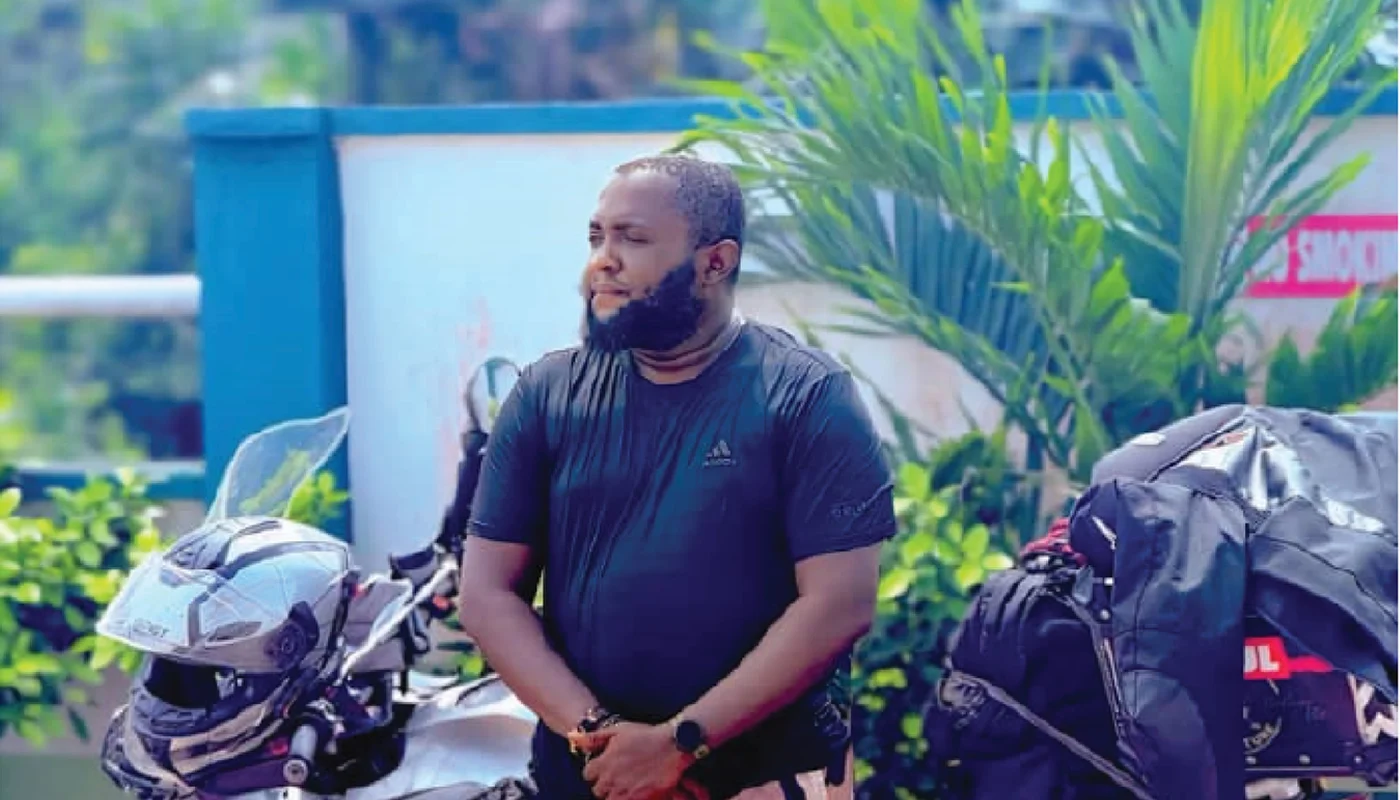
Ilorin-based biker Emmanuel Enya has recounted a harrowing and deeply moving experience on the streets of Lagos, where his compassion and quick thinking helped save the life of a newborn and her mother, even as he became a victim of theft by bystanders he had hoped would help.
Enya, who had traveled from Ilorin, Kwara State, to Lagos for job interviews, found himself in the midst of an extraordinary situation at Ojota. After a long, rain-soaked journey and a stopover in Sagamu, he was approaching Maryland when he noticed a woman standing awkwardly by the roadside. Initially dismissing her as one of the many street dwellers in Lagos, he soon realized something was amiss when he saw her again, this time looking directly at him.
“Her speech was incoherent,” Enya recalled. “She kept repeating, ‘Ikorodu General Hospital,’ but I couldn’t make sense of it at first. Some men nearby told me she was mentally ill, but I could see she was in pain.”
Unbeknownst to Enya, the woman was heavily pregnant, her condition concealed by an oversized gown. As he tried to help her find transportation to Ikorodu, her pain intensified. Enya attempted to call emergency services, but the line went unanswered. He then tried to arrange a commercial bus, handing N5,000 to a bystander who promised to help. The man disappeared with the money.
Undeterred, Enya continued to seek help. He flagged down a well-dressed man, explaining the need to buy essential items for the baby and mother. Trusting the man, Enya handed him N100,000. The man also vanished, leaving Enya not only frustrated but financially devastated.
“I was thrown into frustration,” Enya said. “I had already made an SOS video and sent it to all my WhatsApp groups, but no one called back. People only sent me numbers and addresses.”
As he tried to call a friend for help, the woman, who had by then undressed due to her distress, collapsed and clung to Enya’s leg. It was then that he realized the gravity of the situation: the baby’s head was crowning, but the mother was unresponsive and her pulse was faint.
“I prayed for her and asked someone to get me a carbonated drink and gin. I washed my hands and my electric carving knife, which I had on my bike. Her water broke, and she couldn’t push anymore, so I had to carefully deliver the baby myself.”
But the ordeal was far from over. The baby was born lifeless, the umbilical cord wrapped tightly around his neck. “I was confused and scared,” Enya admitted. “I thought, if anything goes wrong, people will turn the story against me. I prayed to God, asking for help.”
Despite being covered in bodily fluids, Enya performed CPR on the newborn. “The baby was pink, so I kept going until he opened his eyes and smiled.”
Throughout the ordeal, Enya was dismayed by the behavior of bystanders. “Nobody wanted to help. Instead, they recorded videos and stole from me. When the baby was born lifeless, everyone ran away. But when I resuscitated him and he cried, they all rushed back.”
Enya also tried to flag down ambulances and other vehicles, including one with a Red Cross insignia, but none stopped. Eventually, a traffic official arrived, drawn by the congestion caused by the incident. Only after the woman regained consciousness and began to breastfeed did an ambulance finally arrive.
Questions arose about the woman’s mental state. While some bystanders claimed she was mentally ill, Enya disagreed. “She was sick, but not insane. At the hospital, she recognized me and gave me her brother’s phone number in Osun State. I later learned this was her sixth child, and that she is vulnerable to exploitation. She needs mental attention and care.”
Enya’s motivation to help, despite the risks and personal loss, stems from his own difficult upbringing. “I grew up with nothing. I know what pain and suffering are. What kept me going is the belief that to have good things, you must work hard and help others. God works through people. Miracles are rare; most help comes from men.”
He also credits his membership in the Pyrates Confraternity for shaping his values. “To be a Pyrate, you must believe in humanity and making the world a better place. If people would protect the weak and show love, there would be enough for everyone.”
Despite being robbed twice in the course of his good deed, Enya remains steadfast in his belief in compassion. “This is not the first time I have helped people. Once, someone stole from me at work, and others beat him. I stopped them. We are not better than anyone else; life can change for any of us at any time.”
Enya’s story is a powerful reminder of the challenges faced by Good Samaritans in Nigeria, where indifference and opportunism can overshadow acts of kindness. Yet, his actions also highlight the profound impact that one person’s courage and empathy can have, even in the most difficult circumstances.