When a mysterious fever began killing patients in the remote village of Yambuku in northern Democratic Republic of Congo, a young doctor named Jean-Jacques Muyembe was dispatched to investigate. Fresh from postgraduate studies in Belgium, he expected to confront typhoid or yellow fever. Instead, he walked unprotected into the world’s first recorded encounter with Ebola.
In a sparsely equipped mission hospital, he drew blood from a gravely ill nun and packed the sample off to Europe. In a Belgian laboratory, microbiologist Peter Piot and colleagues isolated a previously unknown virus, later named Ebola after a nearby river. Only later did Muyembe grasp how exposed he had been
He recalls removing the needle as blood ran over his bare fingers. There were no gloves, no gowns, no masks. Infection control was rudimentary, and the virus’s lethality was still a mystery. Yet he returned to the wards, trying to comfort patients and trace chains of transmission in a community gripped by fear
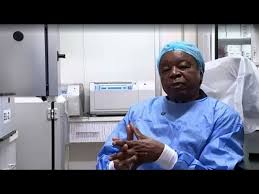
Nearly half a century on, Muyembe, now 84, remains at the centre of his country’s battle against Ebola. As head of the National Institute of Biomedical Research in Kinshasa, he oversees surveillance teams, laboratory networks and emergency responses as the DRC confronts recurrent outbreaks, including in the conflict-scarred northeast
He insists that experience is the country’s greatest weapon. Before vaccines and modern therapies existed, he notes, Congo contained more than a dozen epidemics using classic public health tools: isolating the sick, tracing contacts, mobilising communities and protecting health workers
That hard-won knowledge helped shape global practice. During a major resurgence in Kikwit in the 1990s, Muyembe experimented with transfusions of blood from survivors. Seven of eight patients treated in this way survived, a small but pivotal result that paved the way for antibody-based treatments and, eventually, Ebanga, the first approved Ebola drug
From his office, cluttered with scientific papers, medals and letters from international partners, he now mentors a new generation of African researchers. He argues that the continent can no longer rely on foreign laboratories to diagnose and study its deadliest pathogens
Yet Ebola is only one threat on his desk. Files on mpox and other emerging infections reflect what he sees as a deeper crisis: deforestation, climate change and population pressure are driving people deeper into forests, increasing contact with wildlife and the risk of zoonotic disease
A father of nine, he looks back on that first journey to Yambuku as “the greatest risk” of his life. He helped identify a virus, shape the response and pioneer treatment. At 84, he is still not ready to step away from the fight