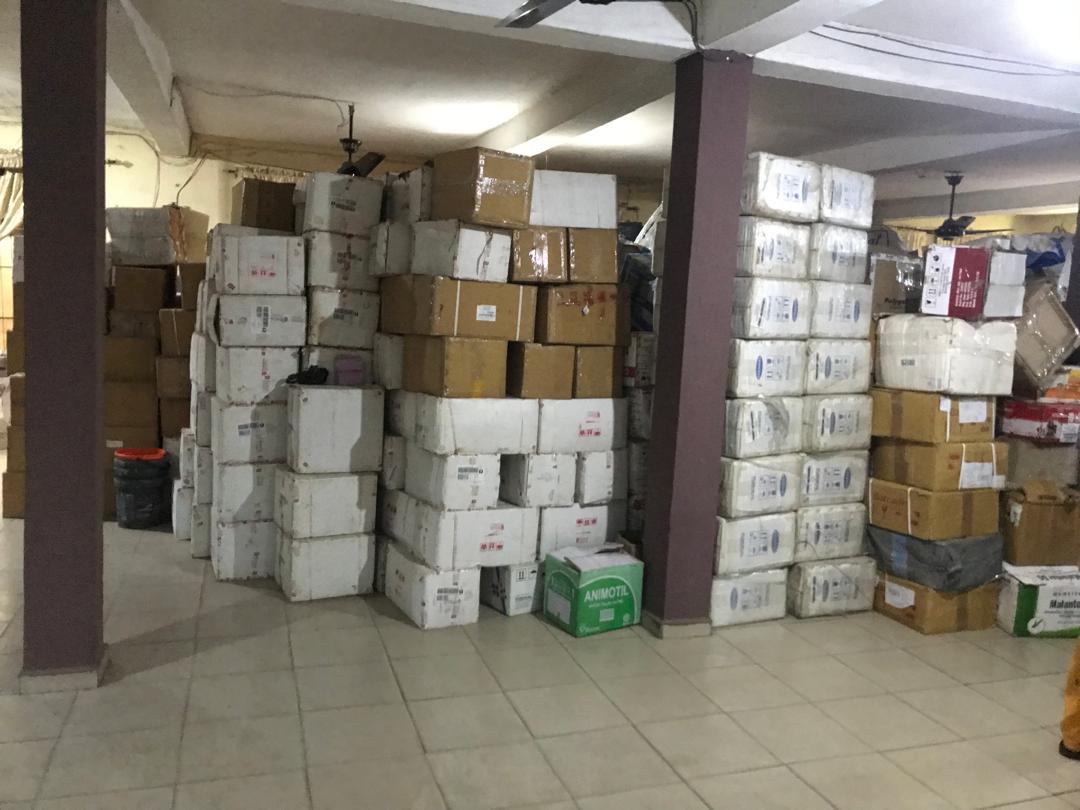
"N265 Million Worth of Counterfeit Medicines Surrendered in Onitsha Drama”
In a dramatic turn of events at the Onitsha Bridgehead, the notorious Ogbo-Ogwu Drug Market has made headlines by surrendering a staggering N265 million worth of fake and substandard drugs to the National Agency for Food and Drug Administration and Control (NAFDAC). The highly publicized handover, which took place under the watchful eyes of the press, was led by Chukwuleta Ndubuisi, Chairman of the market’s Caretaker Committee, and attended by NAFDAC officials.
The seized items, which included expired, banned, and outright fake drugs, were reportedly confiscated during a so-called “routine” market surveillance and a three-month NAFDAC raid. According to Ndubuisi, these operations targeted shops and warehouses suspected of harboring illicit pharmaceuticals. Some of the goods had been piling up since last year, raising questions about how long these dangerous products have been circulating in the market.
Ndubuisi, eager to present the market in a positive light, told journalists, “We are here to hand over the seized fake products to NAFDAC. They include unwholesome, expired, banned, fake, and substandard products. They are approximately N265 million worth of goods.” He was quick to emphasize that this isn’t the first time such a handover has occurred, claiming that the market has a long-standing tradition of cooperating with NAFDAC, dating back to the days of the late Dora Akunyili.
In a bid to distance the market from the fake drug trade, Ndubuisi stressed a supposed “zero-tolerance” policy, stating, “We cannot afford to allow dealers sell products that will kill our people.” He also claimed that most of the seized drugs were smuggled in from outside the market, shifting blame away from local traders.
But the story doesn’t end there. Ndubuisi painted himself and his executive team as victims, alleging threats and intimidation from those involved in the illicit trade. “Those behind the fake drugs have been threatening my life and fighting executive members of the market,” he declared, suggesting a high-stakes battle between good and evil within the market’s walls.
He issued a dramatic warning to fake drug peddlers, urging them to abandon their illegal activities and embrace legitimate business. “Crime doesn’t pay, and there’s no shortcut in life,” he lectured, adding a moralistic spin to the unfolding saga.
NAFDAC’s Anambra State Coordinator, Louis Madubuattah, confirmed the agency’s receipt of over 400 cartons of expired and unregistered drugs, promising that the items would be destroyed. Madubuattah praised the market’s leadership for their cooperation, calling the handover “impressive”,a statement that raises eyebrows given the market’s history as a hub for counterfeit pharmaceuticals.
This latest spectacle follows a series of NAFDAC raids in the region, including a high-profile operation led by Dr. Martins Iluyomade, Director of NAFDAC South-East Zone, which saw large quantities of suspected fake drugs seized from the same market. The agency’s ongoing crackdown is part of a broader campaign to clean up Nigeria’s pharmaceutical supply chain, but the persistence of such large-scale seizures suggests the problem is far from solved.
While the Ogbo-Ogwu Drug Market leadership and NAFDAC are eager to showcase their collaboration as a model for public health protection, critics argue that these periodic handovers are little more than performative gestures. With counterfeit drugs still flooding the market, many are left wondering whether these headline-grabbing events are truly making a difference,or simply providing cover for business as usual.
As the dust settles on this latest media spectacle, one thing is clear: the fight against fake drugs in Nigeria is far from over, and the public remains at risk while authorities and market leaders trade blame and bask in the spotlight.