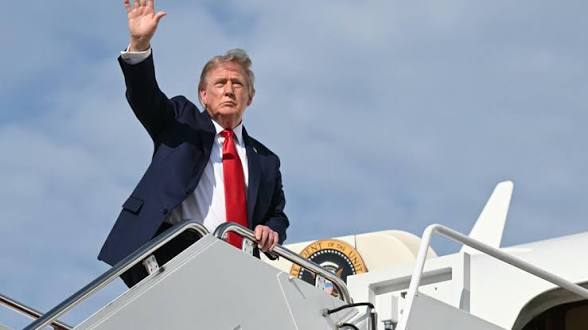
Oil prices slipped as traders weighed the impact of a sweeping new United States campaign to choke off Iran’s access to global finance, a move President Donald Trump has framed as an economic war on Tehran.
Both main crude benchmarks fell around two percent, with Brent hovering near 92 dollars a barrel and West Texas Intermediate just above 85 dollars. The pullback reflected concern that aggressive US sanctions could unsettle trade flows and dampen global growth, even as they threaten to curb Iranian exports.
US Treasury Secretary Scott Bessent signalled that Washington is preparing its “most crushing” financial operation yet against Iran, promising more details at a news conference. The strategy is designed to isolate Tehran from dollar funding and key banking channels, tightening pressure as the conflict in the Middle East grinds on.
Vice President JD Vance described the effort as a “delicate dance,” acknowledging that Iran is likely to retaliate by seeking leverage over energy markets and other pressure points. Bessent urged allies, including China, to align with Washington’s approach, pointedly calling on Beijing to “get with the programme” while insisting that the toughest conversations would happen behind closed doors.
The renewed geopolitical tension hit sentiment across Asian markets. Tokyo’s Nikkei closed down 0.7 percent, Shanghai slipped 0.6 percent and Hong Kong’s Hang Seng dropped nearly two percent. Losses were echoed in Taipei, Wellington, Bangkok, Mumbai and Jakarta, while Sydney, Singapore, Manila and Kuala Lumpur managed only marginal gains.
Investors were already on edge ahead of a pivotal week for technology and artificial intelligence. South Korea’s Kospi tumbled more than three percent after Samsung Electronics disclosed it had spent 80 billion dollars on share buybacks following weeks of volatile trading. Chipmakers that had soared on AI optimism, including Samsung and SK hynix, have retreated amid a broader tech sell-off.
Attention is now turning to Nvidia, the world’s most valuable chipmaker, whose upcoming earnings are seen as a litmus test for the durability of the AI boom. “The spending machine is still running, but the bill is getting heavier,” said Stephen Innes of SPI Asset Management, warning that Nvidia must prove that the sector’s massive capital outlays can still generate returns.
Traders are also watching the annual gathering of central bankers and finance chiefs in Jackson Hole, where any hint on the future path of US interest rates could ripple through bond and commodity markets already unsettled by rising federal debt and inflation concerns.