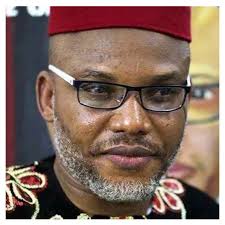
The recent ruling by an Abuja court regarding Nnamdi Kanu, the leader of the Indigenous People of Biafra (IPOB), has sparked mixed reactions across the public spectrum. While some express admiration for the family's determination, others voice outrage over the perceived injustice, and there are those who remain apathetic to the situation altogether.
The Kanu family has publicly voiced their concern following the court's refusal to issue a Production Warrant, which would have allowed Kanu to be transported from Sokoto Correctional Facility to Abuja. Emma Kanu, Nnamdi's younger brother and spokesperson, conveyed the urgency of the matter, highlighting that Kanu's pending appearance in court is critical for finalizing appeal documents. He noted that a summons had already been issued for Kanu to appear on November 28, emphasizing its importance in the ongoing legal proceedings.
Many supporters of Kanu feel a sense of urgency and frustration over the court's decision. They regard the refusal of the Production Warrant as an obstacle to justice, arguing that it undermines Kanu's right to a fair legal representation. Emma Kanu's appeals to the judiciary resonate with those who share his concerns about the fairness of the legal process, igniting feelings of solidarity among supporters of the IPOB movement.
However, others express outrage, finding the court's refusal indicative of larger systemic issues within Nigeria's judicial system. Critics argue that Kanu's sentencing to life imprisonment for alleged terrorism reflects a troubling trend in the treatment of political dissenters. They call for accountability and a reconsideration of how political prisoners are handled within the legal framework, reflecting a growing awareness and activism around human rights issues.
On the other hand, some individuals remain apathetic, viewing the situation as a complex political issue that does not directly affect their daily lives. This segment of the public may feel overwhelmed by the myriad of challenges facing Nigeria today, choosing instead to focus on personal concerns rather than engaging with the broader implications of Kanu's case.
The court's summons, referencing Charge No. FHC/ABJ/CR/383/2025 against Kanu, underscores the legal obligations of all parties involved. This includes the Department of State Services and the Federal Government, highlighting the significant nature of the proceedings. As these developments unfold, many observers are left questioning the judiciary's commitment to upholding legal rights in politically charged cases.
The implications of Nnamdi Kanu's case extend far beyond his family, touching on critical issues of political dissent, self-determination, and legal rights in Nigeria. As public interest grows, the mixed voices surrounding this case reflect a society grappling with its values and the path forward. The legal community and human rights organizations are likely to scrutinize the judiciary's actions closely, particularly regarding the treatment of political prisoners and the broader implications for Nigeria's democratic landscape.