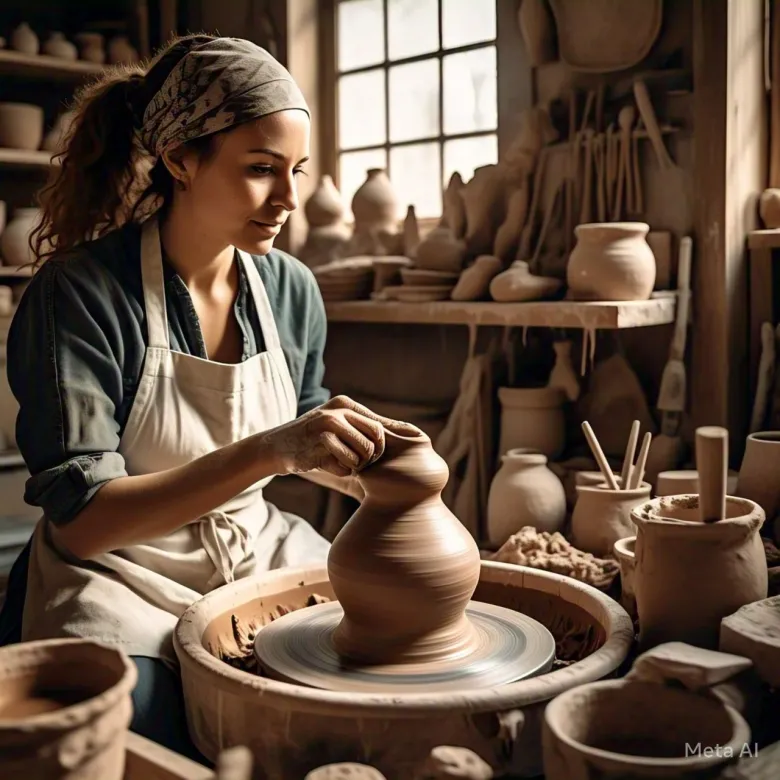
Sophia Navarro had always found solace in clay. As a potter, her hands shaped delicate bowls, sturdy mugs, and intricate vases, each piece a reflection of patience and care. Her small ceramics studio, Navarro Pottery, was her pride—tucked in a quiet corner of the city, filled with the scent of wet earth and the soft hum of a spinning wheel.
Then, the flood came.
A torrential storm swelled the riverbanks, sending water crashing through the streets. By the time the rain stopped, Sophia’s studio was unrecognizable—drenched shelves, shattered pottery, and layers of silt covering the floor. The kiln, her most prized possession, was ruined beyond repair. Years of work, lost in a single night.
In the days that followed, Sophia wandered through the wreckage, her chest hollow with grief. The kiln was too expensive to replace, and she had spent her last savings on a new clay shipment—now nothing but ruined lumps of mud. Customers called with sympathy, but orders had to be canceled. The weight of starting over felt unbearable.
Then, as she cleared away the debris, her fingers brushed against something familiar—a small clay figurine, perfectly intact. It was one of the first things she had ever made, a tiny bird her grandmother had taught her to sculpt as a child. Sophia held it in her palm, feeling its smooth surface, the careful detail in its wings. Clay endures, her grandmother had once said. You just have to reshape it.
That night, instead of giving in to despair, Sophia took a handful of the flood-soaked clay and began to knead. She worked it over and over, pressing out the water, shaping it with her fingers until something new emerged—a small bowl, imperfect but whole.
The next day, she salvaged what she could, cleaning and drying the remaining clay, reshaping what had been ruined. With no kiln, she turned to air-drying techniques, experimenting with finishes and textures she had never used before. She shared her process online, and to her surprise, people responded. Orders trickled in for these new, raw pieces—bowls, sculptures, and vases that bore the marks of their survival.
Soon, local artists and friends rallied around her. A retired potter lent her a space in his workshop. A past student offered her an old kiln. Slowly, Navarro Pottery took shape again—not as it was, but as something new, something resilient.
One day, a woman visited her makeshift studio, clutching a broken ceramic plate. "This belonged to my grandmother," she said, voice heavy with emotion. "Is there any way to fix it?"
Sophia studied the shards and nodded. Instead of hiding the cracks, she fused them together with gold lacquer, using the Japanese art of kintsugi—embracing flaws rather than disguising them.
When she handed the plate back, the woman’s eyes filled with tears. "It’s even more beautiful now."
Word spread. People began bringing broken heirlooms, asking Sophia to restore them, to highlight the fractures with something precious. The philosophy of kintsugi became the heart of her studio—celebrating imperfection, turning loss into art.
Months later, as she placed a newly sculpted bird figurine on the shelf, Sophia ran a hand over the sign above her door: The Clay Within.
She had lost everything. But in its place, she had created something even stronger.