When we were boys, we thought feelings were a weakness.
"Men don’t cry," Baaj would say after a bloody fight.
"Be a man jare," Deji muttered when I hesitated before jumping off the bridge into the river.
"Women love strong men guy," Kola whispered in the locker room, a grin stretching across his face.
We never said I love you or I’m scared or I’m hurting. Those words belonged to the weak. We fought instead of talked, drank instead of felt, and convinced ourselves we were unbreakable.
By the time we became men, we were all shadows of ourselves.
The night Kola died, it rained.
Not the soft drizzle that makes you roll over in bed, but the kind that floods the city, makes gutters overflow, and turns streets into rivers.
I was home when Deji called.
"Kola is dead."
My chest tightened. “What?!”
"He.. He shot himself."
The world muted. The rain pounding against my window. The clock ticking. My heartbeat in my ears.
Then, like a dam bursting, the memories came.
Kola, laughing, cigarette between his lips.
Kola, breaking up a fight between Baaj and some guy who said something about his mother.
Kola, drunk out of his mind, muttering “I’m tired, man.”
I should have asked what he meant.
I should have.
Kola had been the glue.
The one who always called first, the one who dragged us out when life got in the way, the one who kept us tethered to each other.
And now, he was gone.
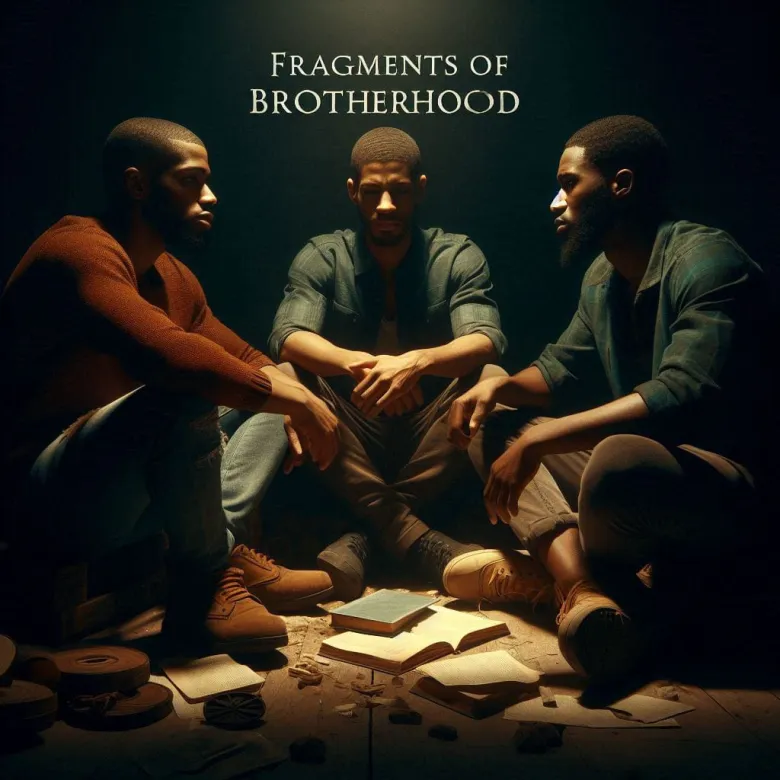
We sat in Deji’s apartment, surrounded by silence, smoke, grief and guilt.
“He left a note,” Deji finally said.
Baaj exhaled sharply. "What did it say?"
Deji’s hands clenched. “Just three words.”
We waited.
"I was tired."
The words landed like a punch.
None of us spoke. What was there to say?
That we didn’t see it coming? That would be a lie.
Baaj stood suddenly, knocking over a whiskey bottle.
"This is bullshit," he muttered. "Kola wasn’t weak."
I stared at him. “And what does that mean?”
“It means he wouldn’t—” Baaj’s jaw clenched. “He wouldn’t just do this.”
"You think he wanted to?" Deji’s voice was hoarse. "You think he just woke up and decided to die?"
Baaj said nothing.
I swallowed. “We should’ve checked in on him.”
Deji scoffed, bitter. "Like we check in on each other?"
The silence that followed was suffocating.
He was right.
I lay awake that night, staring at the ceiling.
I thought about all the times Kola had hinted at his struggles, the jokes that weren’t really jokes, the nights he drank too much, laughed too little.
I thought about how, when we were kids, we had a pact: No fear. No weakness. No tears.
And I wondered how different things would have been if we had allowed ourselves to be – to be afraid, to cry.
One night, after a few drinks, Kola muttered, ‘Man, do you ever just… feel empty?’
We laughed it off, and said he needed sleep. He laughed too. But looking back, I wonder if that was the moment we lost him.
I thought about the note, about that night three weeks ago when Kola called me. I was really exhausted, so I didn’t pick up.
The next morning, I called back, he didn't pick up but texted: "Forget it, bro. It’s cool."
I forgot it.
Now, I never will.
At the funeral, Kola's sister said, “Kola was the strongest person I knew." But strength isn’t about how much you can carry. It’s about knowing when to ask for help.
Deji broke the silence first. “We need to do better,” he muttered.
Baaj nodded, his voice unsteady but clear. “Yeah, we do.”
Weeks turned into months, the change was gradual but real. We checked in more. We talked. Not about football or fights or work, but about the things we never dared to say. The fears we carried, the pressures we felt, and the nights we lay awake, drowning in our own thoughts. The dam that had held us back for years finally broke.
Kola's death left a wound that would never fully heal, but it taught us something we had spent a lifetime ignoring: strength isn't silence. Strength is speaking, listening, and being there for each other.