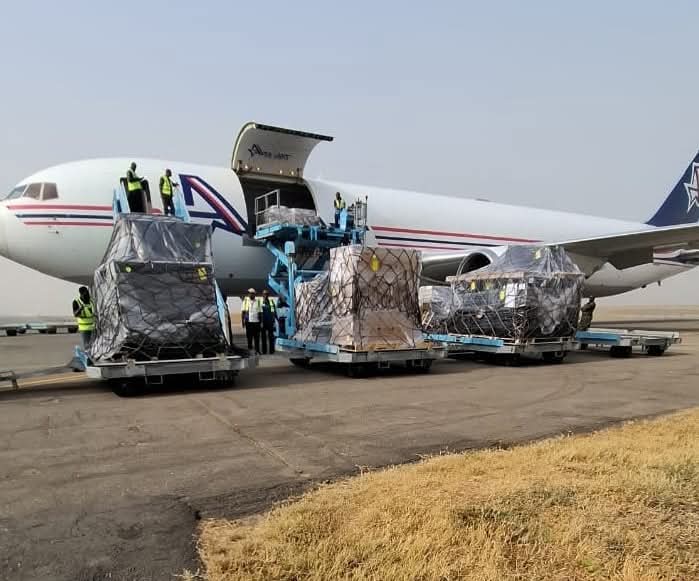
Former Kaduna Central senator and prominent public commentator Shehu Sani has applauded the delivery of new United States military supplies to Nigeria, describing the move as a significant boost to the country’s fight against terrorism, banditry and other security threats.
The consignment, delivered by United States forces and confirmed by the United States Africa Command, AFRICOM, is part of a broader security partnership between Washington and Abuja aimed at strengthening Nigeria’s capacity to confront violent armed groups, particularly in the northern regions.
Sani, a long-standing critic of both insurgent groups and government failures in tackling insecurity, welcomed the development in a post on his X handle. He said the supplies were “a welcome development and commendable,” stressing that Nigeria’s security forces require not only political will but also modern equipment and international cooperation to succeed.
He argued that the latest delivery from the US should serve as a model for other countries that publicly express solidarity with Nigeria but have been slow to provide concrete assistance. According to him, expressions of sympathy are no longer enough in the face of persistent attacks on rural communities, mass abductions and the entrenchment of criminal networks across large swathes of the North-West.
“Other countries that claim to like or love us should emulate this gesture,” Sani said, urging Nigeria’s international partners to move beyond rhetoric and offer practical support that can make a measurable difference on the ground.
He specifically linked the new supplies to ongoing operations against notorious bandit leaders operating in the North-West, naming figures such as Bello Turji, Adamu Aleru and Baleri, who have been repeatedly accused by authorities and local communities of masterminding killings, kidnappings and village raids in Zamfara and neighbouring states.
“Anything that can be done to eliminate Bello Turji, Adamu Aleru, Baleri and other terrorist criminals in the hinterland of Zamfara is welcomed,” Sani declared, reflecting the frustration of many residents in the region who feel besieged by armed groups and abandoned by the state.
AFRICOM, in its statement confirming the delivery, said the supplies were handed over to Nigerian authorities in Abuja and are intended to support ongoing security operations. The command framed the move as part of a long-term collaboration with Nigeria, one of the United States’ key security partners in Africa.
“This delivery supports Nigeria’s ongoing operations and emphasises our shared security partnership,” AFRICOM stated, underscoring Washington’s interest in helping Nigeria confront threats that have implications not only for domestic stability but also for regional security in West and Central Africa.
While specific details of the equipment were not fully disclosed, such deliveries typically include items such as vehicles, communications gear, surveillance equipment, protective gear and other logistics support. In recent years, the US has also supplied Nigeria with platforms like the A-29 Super Tucano aircraft for counterinsurgency operations, alongside training and advisory support for Nigerian forces.
The latest consignment comes at a time when Nigeria is grappling with a complex security landscape. In the North-East, the military continues to battle remnants of Boko Haram and Islamic State West Africa Province. In the North-West and parts of the North-Central, heavily armed bandit groups have evolved from cattle-rustling gangs into sophisticated criminal networks capable of mass kidnappings, attacks on highways and assaults on security formations.
Communities in Zamfara, Katsina, Kaduna, Sokoto and Niger states have borne the brunt of these attacks, with thousands killed and hundreds of thousands displaced over the past several years. Many villages have been emptied as residents flee to urban centres or displacement camps, while farmers have abandoned their fields, worsening food insecurity.
Against this backdrop, Sani’s endorsement of the US supplies reflects a broader demand from northern leaders, civil society groups and affected communities for more decisive and better-resourced action. He has repeatedly argued that Nigeria’s security forces are overstretched and under-equipped, and that international partnerships, when properly managed, can help close critical capability gaps.
Security analysts note that foreign military assistance alone cannot resolve Nigeria’s insecurity, which is rooted in a mix of poverty, weak governance, corruption, arms proliferation and local grievances. However, they acknowledge that improved equipment, training and intelligence-sharing can enhance the effectiveness of operations, reduce casualties among troops and civilians, and increase pressure on armed groups.
The United States, for its part, has framed its engagement with Nigeria as part of a wider effort to support African partners in tackling terrorism, piracy, trafficking and other transnational threats. AFRICOM regularly conducts joint exercises, training programmes and capacity-building initiatives with Nigerian forces, while also engaging with regional bodies such as the Economic Community of West African States.