A public appearance by American streamer IShowSpeed in Lagos, Nigeria, has sparked controversy after a Nigerian woman accused members of his security team of sexual assault during a chaotic encounter in a packed crowd.
The incident unfolded during one of the streamer’s heavily attended outings in Lagos, where large numbers of fans gathered to see him in person. Videos shared online show dense crowds pressing in around the content creator as he moved through the streets with a security detail attempting to keep order.
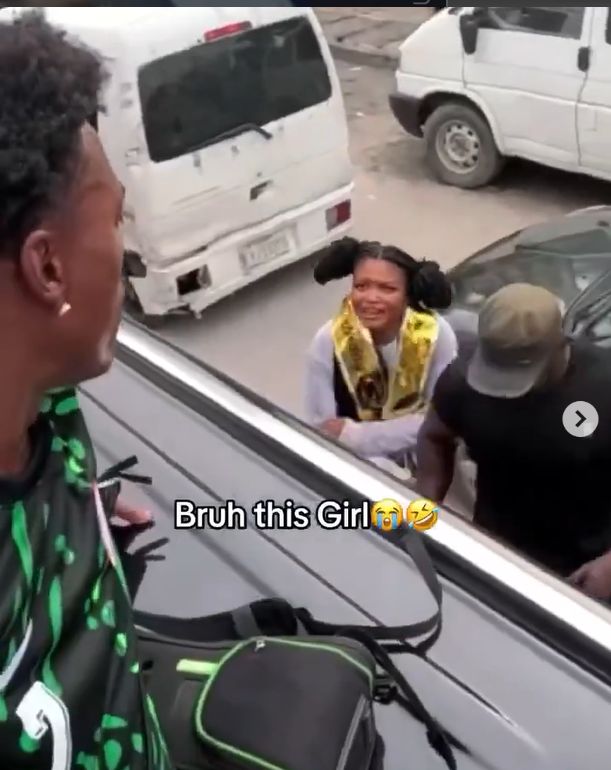
Amid the commotion, a young woman pushed her way toward the streamer, shouting and gesturing as she tried to get his attention. According to footage circulating on social media, she challenged IShowSpeed to a footrace, insisting that she could outrun him. Onlookers can be heard cheering and reacting as she confronted him, turning the moment into an impromptu spectacle.
Witness videos show the woman and the streamer lining up for a short sprint, with fans forming a loose corridor around them. The race, though brief and informal, quickly became a focal point of the gathering. When it ended, the woman appeared to lose, prompting a mix of laughter, noise and jostling from the surrounding crowd.
It was in the aftermath of this race that the woman alleged she had been sexually assaulted by members of the security team. In a video recorded shortly after the incident, she can be seen visibly agitated, raising her voice as she describes what she says happened while she was trying to reach the streamer and during the rush around the race.
She claims that as she forced her way through the crowd, someone within the security detail grabbed her chest. Using explicit language to describe the contact, she repeatedly insists that her breasts were touched inappropriately. She maintains that she both felt and saw the act, emphasizing that it was not accidental and that she was certain it occurred.
In the clip, bystanders can be heard questioning her, asking who exactly among the security personnel was responsible. When pressed to identify the specific individual, she appears unable to single out any one person, pointing instead toward the general cluster of security staff and insisting that the assault took place in the crush of bodies surrounding the streamer.
The woman’s inability to name a particular guard has become a central point in the online debate that followed. Some social media users have expressed sympathy, arguing that in a chaotic, tightly packed crowd, it can be difficult for a victim to clearly see who touched them, especially when multiple people are pushing and shoving at once. Others have questioned the credibility of the allegation, suggesting that without a clear identification, it will be hard to substantiate her claim.
Clips of the encounter, including the race and the woman’s subsequent accusation, have been widely shared across platforms, drawing intense scrutiny. Comment sections are filled with divided reactions. A number of commenters condemn any possibility of harassment, stressing that no level of excitement or crowding justifies unwanted physical contact. They argue that security personnel, in particular, have a responsibility to maintain professional boundaries even under pressure.
On the other side, some users argue that the woman’s decision to push aggressively through the crowd and physically insert herself into the streamer’s path contributed to the chaos. They claim that in such a frenzied environment, incidental contact is almost inevitable, and that it may be difficult to distinguish between deliberate groping and accidental brushing in a moving crowd.
The incident has also reignited broader conversations about fan behavior around celebrities and influencers, especially in public, uncontrolled settings. IShowSpeed, known for his high-energy, unpredictable style and massive online following, tends to attract large, excitable crowds wherever he appears. In Lagos, videos from his visit show fans swarming vehicles, chasing after him on foot and clustering tightly around him whenever he stops.
Security experts and commentators online have pointed out that such conditions are ripe for both genuine safety risks and disputed allegations. In dense crowds, they note, people can be jostled, grabbed or touched without clear visibility of who is responsible. At the same time, the power imbalance between a visiting celebrity entourage and local fans can make it difficult for alleged victims to seek redress or be taken seriously.
Women’s rights advocates in Nigeria and in the diaspora have used the incident to highlight how often women report being groped or harassed in crowded public spaces, from concerts and rallies to markets and transit hubs. They argue that even when a victim cannot identify a specific perpetrator, the experience is still real and traumatic, and that such complaints should not be dismissed out of hand simply because the environment was chaotic.
Others caution against rushing to judgment in the absence of clear evidence, warning that viral outrage can quickly escalate into reputational damage for individuals or organizations before any formal investigation takes place. They emphasize the need for credible fact-finding, including reviewing all available footage and speaking to witnesses who were close to the scene.
As of now, there has been no widely reported formal statement from IShowSpeed or his team directly addressing the woman’s allegation. There is also no public indication that local authorities have opened an official investigation, though online calls for accountability and clarity continue to grow.
The episode underscores the challenges of managing large, spontaneous fan gatherings in an era where influencers can draw crowds comparable to those of major entertainers, often without the infrastructure or planning that accompanies traditional events. It also highlights the persistent vulnerability of women in crowded, male-dominated spaces, where physical boundaries can be easily crossed and accountability is often elusive.
For many observers, the Lagos incident is less about a single allegation and more about a pattern: the collision of celebrity culture, inadequate crowd control and the ongoing struggle to ensure that women’s reports of harassment are heard, investigated and taken seriously, even when the circumstances are messy and the evidence is imperfect.
Whether this particular case leads to any formal action remains uncertain. What is clear is that the viral spread of the woman’s accusation has forced a wider conversation about how security teams operate around high-profile figures, how fans are managed in public spaces and how societies respond when a woman says that, in the middle of the chaos, someone crossed a line that should never be crossed.