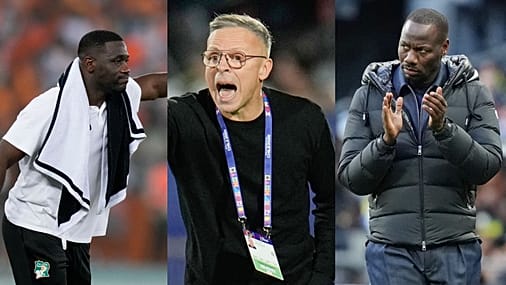
Africa will send a record 10 teams to the 2026 FIFA World Cup in the United States, Canada and Mexico, and the touchline will be as closely watched as the pitch. The continent’s representatives – Algeria, Ghana, DR Congo, Senegal, Morocco, Tunisia, Egypt, Cape Verde, South Africa and Côte d’Ivoire – arrive with a striking blend of homegrown and foreign coaches, reflecting a deeper shift in African football politics and identity.
For many of the continent’s powers, the era of automatic reliance on European managers is fading. Senegal have turned to Pape Thiaw, a former international who inherited the job after Aliou Cissé’s long spell and is tasked with refreshing a golden generation. In Morocco, Mohamed Ouahbi steps into the spotlight after internal restructuring, charged with sustaining the momentum built by the Atlas Lions’ recent global breakthroughs.
Côte d’Ivoire’s dugout is occupied by Emerse Faé, whose calm stewardship during their triumphant home Africa Cup of Nations campaign earned him a permanent deal. Egypt have entrusted their ambitions to Hossam Hassan, a national icon whose fiery personality contrasts with the more conservative foreign coaches of the past. Cape Verde, one of the continent’s most consistent overachievers, continue with Bubista, the long-serving tactician credited with building a clear identity for the island nation.
Tunisia sit at the crossroads of this debate. Sabri Lamouchi, French-born but of Tunisian descent, embodies the dual-heritage question: is he a foreign import or an extension of local football culture? His appointment complicates the statistics, pushing the tally of African-born or African-rooted coaches to six or seven, depending on how federations and fans choose to define “homegrown”.
Elsewhere, the preference for European experience remains strong. Ghana have turned to veteran Portuguese strategist Carlos Queiroz, whose global résumé is expected to steady a talented but inconsistent squad. Algeria are guided by Vladimir Petković, the Bosnian-Swiss coach renowned for his work with Switzerland at major tournaments. South Africa persist with Belgian Hugo Broos, an Africa Cup of Nations winner with Cameroon, while DR Congo rely on Frenchman Sébastien Desabre, a familiar figure in African club and national football.
The coaching map underscores a broader transition. Recent continental tournaments, where African-born managers dominated the latter stages, have strengthened arguments for trusting local expertise. With 10 teams on the world stage, the question is no longer only how far Africa can go, but whose vision – local or foreign – will define its next World Cup chapter.