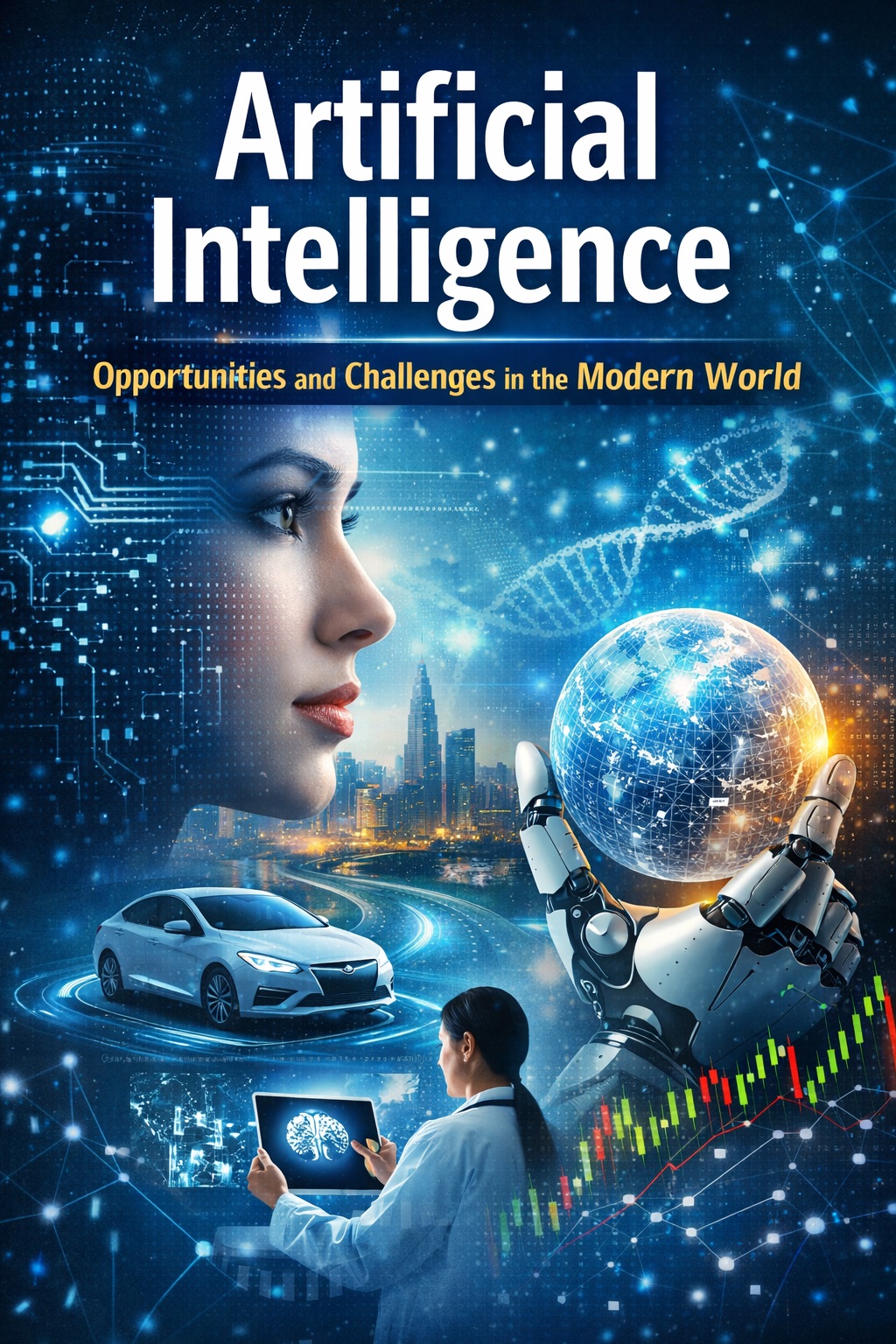
Artificial Intelligence (AI) is one of the most influential scientific and technological developments of the 21st century. Once considered a concept limited to computer science research and science fiction, AI is now embedded in everyday life. From voice assistants and recommendation systems to medical diagnostics and financial analysis, AI systems are transforming how individuals, organizations, and governments operate.
AI refers to the ability of machines to perform tasks that typically require human intelligence. These tasks include learning from experience, recognizing patterns, making decisions, and solving problems. A major driver of AI progress is machine learning, a method that enables computers to learn from large datasets without being explicitly programmed for every scenario. Advanced techniques such as deep learning allow systems to process complex information, including images, speech, and text, with remarkable accuracy.
The impact of AI is particularly visible in healthcare. AI-powered systems can analyze medical images to detect diseases such as cancer at early stages, often with high precision. In addition, predictive algorithms help hospitals manage patient flow and allocate resources efficiently. In education, AI supports personalized learning platforms that adapt to students’ strengths and weaknesses, creating more tailored and effective learning experiences.
The business and financial sectors also benefit from AI technologies. Companies use predictive analytics to understand consumer behavior and improve marketing strategies. Banks rely on AI systems to detect fraudulent transactions and assess credit risks. In transportation, intelligent traffic management systems reduce congestion, while autonomous vehicle technology continues to develop rapidly.
Despite these advantages, AI presents important ethical and social challenges. One major concern is job displacement. As automation increases, certain routine and repetitive jobs may decline, requiring workers to develop new skills. Another issue is algorithmic bias. Because AI systems learn from historical data, they may unintentionally reinforce existing social inequalities if that data contains bias. Data privacy and transparency are also critical concerns, especially as AI systems make decisions that affect people’s lives.
To address these challenges, responsible development and regulation are essential. Governments, researchers, and technology companies must collaborate to establish ethical guidelines and accountability standards. Education systems must also prepare students for an AI-driven economy by emphasizing digital literacy and critical thinking.
In conclusion, Artificial Intelligence is reshaping modern society in profound ways. While it offers significant benefits in healthcare, education, business, and transportation, it also raises ethical and economic concerns. The future of AI depends not only on technological advancement but also on society’s commitment to using it responsibly and equitably.