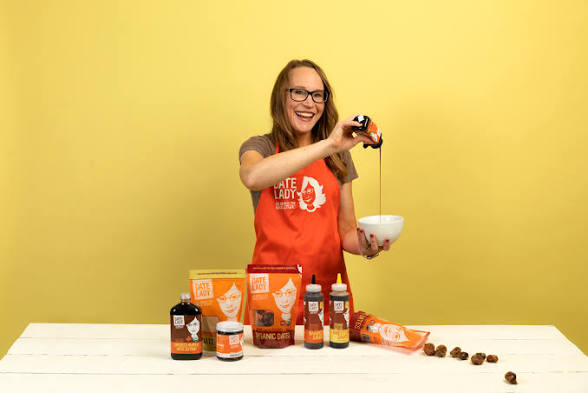
When Colleen Sundlie first tasted pure date syrup in a market in Al Ain in the United Arab Emirates, she was a young mother far from home, cradling a baby and a curiosity. Local women urged her to try the thick, amber liquid, praising it as a traditional staple fed to generations of children. One spoonful was enough to convince her she had stumbled onto something special.
Dates were everywhere in Emirati life: offered with Arabic coffee, stacked in markets in dozens of varieties, woven into daily rituals. What struck Sundlie was how different this world was from the United States, where most shoppers knew only a couple of date varieties and almost no one had heard of pure date syrup.
Back in the U.S., she went looking for the product that had captivated her family. She found almost nothing. A few obscure import-store bottles contained added sugar and lacked the rich flavor she remembered. That gap became her opportunity. If she wanted real date syrup, she would have to bring it in herself. It felt, she says, like a “no-brainer” for American shelves.
With five children and limited resources, Sundlie treated the idea as a side hustle at first. She and her husband scraped together funds to attend major international food shows, including BioFach in Germany and Gulfood in Dubai, to meet potential suppliers. The couple spent thousands on travel and roughly $60,000 on their first shipment and a small bottling space in the U.S.
They called the brand Date Lady and committed to organic, minimal-ingredient products: syrups, spreads, sauces and later sugar, all built around dates. Friends, family and a local bank backed the “crazy idea” with both encouragement and capital.
Growth was slow by design. Sundlie balanced school drop-offs, sports schedules and reading groups with email marathons, product testing at her kitchen bench and meetings with buyers. The company saw steady revenue within a year but needed several years to turn a profit.
There were painful missteps. A 60,000-pound batch of dates processed in California produced a syrup with an off profile. Instead of writing it off, Sundlie experimented until she transformed it into a barbecue sauce that became one of Date Lady’s standout products.
Today, Date Lady’s products are manufactured in Springfield, Missouri and sold nationwide. Annual revenue has climbed from more than $2 million to nearly $7 million, with eight figures in sight. Sundlie credits careful control of costs, refusal to compromise on ingredients and the patience to grow without crushing debt.