The International Monetary Fund (IMF) has kept Nigeria's economic growth forecast for 2026 unchanged at 4.1 per cent, while warning that increasing prices of essential goods could deepen poverty and worsen food insecurity across the country.
In its July 2026 World Economic Outlook (WEO) Update released on Wednesday, the IMF projected that Nigeria's gross domestic product (GDP) would expand by 4.1 per cent in 2026 and rise further to 4.3 per cent in 2027. Both projections remain the same as those published in the Fund's April outlook. The IMF also maintained its growth forecast for sub-Saharan Africa at 4.3 per cent for 2026 and 4.5 per cent for 2027.
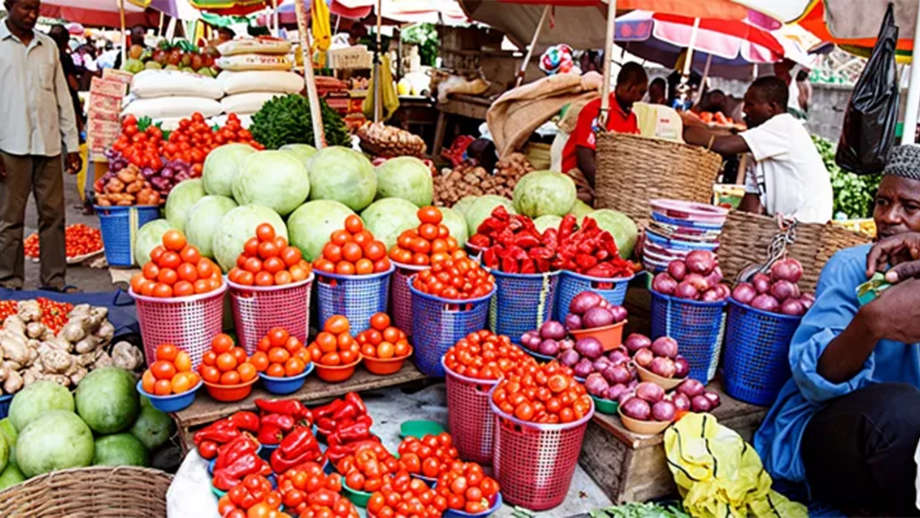
The report noted that Nigeria's economic outlook is being supported by improved macroeconomic stability and favourable terms of trade. However, it cautioned that the rising cost of basic necessities is expected to place greater pressure on households, increasing poverty levels and food insecurity.
The IMF said economic performance across sub-Saharan Africa would remain broadly stable but vary from country to country, depending on policy decisions, the pace of reforms and exposure to external economic shocks. It added that oil-importing and non-resource-intensive economies are likely to be more vulnerable to higher food and energy prices, while some larger economies continue to benefit from earlier economic reforms.
Globally, the Fund lowered its 2026 growth forecast to 3.0 per cent from the 3.1 per cent projected in April but raised its 2027 forecast to 3.4 per cent. It attributed the adjustment largely to the economic impact of the conflict in the Middle East, although stronger demand driven by advances in artificial intelligence and technology has helped cushion some of the effects.
Despite the global economy's resilience, the IMF warned that risks remain skewed to the downside, citing renewed trade disputes, geopolitical tensions and tighter financial conditions as major threats to growth.
The Fund urged governments to strengthen public finances by improving revenue collection, enhancing tax administration, managing public spending more efficiently and increasing investments in infrastructure, education and targeted social protection programmes. It also advised commodity-exporting nations to avoid excessive spending during periods of high commodity prices and instead save or reinvest the additional revenue within sustainable fiscal frameworks.
In addition, the IMF called on policymakers to accelerate structural reforms aimed at boosting productivity, improving labour markets, expanding digital and physical infrastructure, encouraging stable trade policies and strengthening international cooperation to support long-term economic growth.This version preserves the key facts while using fresh wording and a smoother news style.