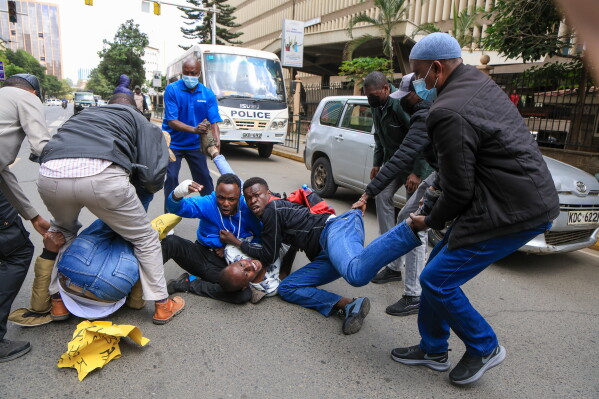
Police and military units flooded key streets and public spaces in Dar es Salaam as authorities moved decisively to block planned pro-democracy protests in Tanzania’s largest city.
The demonstrations had been called by opposition groups and civil society activists to demand sweeping political reforms after a fiercely disputed October election. Protesters also sought the release of opposition leader Tundu Lissu, who is being held on treason charges that his supporters say are politically motivated.
By early morning, convoys of police trucks and armored vehicles were stationed at major junctions, around government buildings and near the grounds of the city’s international trade fair. Officers armed with rifles and batons patrolled on foot, stopping groups of young people and ordering them to disperse. The show of force was so extensive that, despite days of online mobilization, no organized protest was visible in the city center.
Inside the trade fair, business continued but under an unusually heavy security presence. Visitors passed through multiple checkpoints as plainclothes officers mingled with the crowds, watching for any sign of political activity. Vendors said they had been warned not to display material that could be interpreted as supporting the opposition.
The clampdown came after a stark warning from Home Affairs Minister Patrobas Katambi, who dismissed the idea that citizens could choose their own day of protest. He insisted that the state would act firmly against anything it considered a threat to public order, framing the planned marches as a potential source of chaos rather than a constitutional right.
Analysts say the government has remained on edge since the October vote, when security forces were accused by rights groups of using lethal force to quell unrest, leaving hundreds dead or injured. The memory of that violence, they argue, has made authorities determined to prevent any repeat, even at the cost of shutting down peaceful assembly.
Some residents questioned whether the heavy-handed approach would resolve the underlying tensions. “While citizens are being held accountable, leaders should also ask themselves whether they are doing the right thing,” said Dar es Salaam resident Peter Tarimo. “They should think about why these things are happening. Is it because of the people, or because of the leaders?”