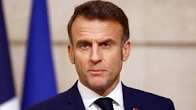
French President Emmanuel Macron has warned Iran against imposing any form of toll or maritime fee on vessels transiting the Strait of Hormuz, insisting that freedom of navigation through the vital waterway must be preserved under international law.
Macron’s comments followed reports from Iranian media that Tehran had inserted a clause on “maritime service fees” into a broader framework arrangement with the United States aimed at ending the current conflict in the Middle East. The Strait of Hormuz, a narrow chokepoint between the Persian Gulf and the Gulf of Oman, handles a significant share of the world’s seaborne oil and liquefied natural gas exports, making any disruption there a global concern.
Speaking in a televised interview ahead of a meeting of leading industrialised nations, Macron said France would oppose any attempt by Iran to monetise passage through the strait. He framed the issue as a test of the rules-based international order, stressing that commercial shipping must not be turned into a revenue stream for a state at the centre of a regional confrontation.
Macron confirmed that a framework accord involving Washington and Tehran had already been signed electronically, with technical annexes still under negotiation. He declined to reveal specific provisions, citing diplomatic sensitivity, but underlined that reopening the strait without new financial or political conditions was a central objective for European powers anxious about energy prices and supply security.
To reinforce that stance, Macron said a joint French-British maritime mission was ready to move rapidly into the area if required. The French aircraft carrier Charles de Gaulle, he noted, could reach the vicinity of the strait within days, providing both a deterrent presence and support for freedom-of-navigation operations.
The French leader rejected suggestions that the emerging deal amounted to a diplomatic victory for Tehran. He argued that any sustainable settlement must also address concerns over Iran’s nuclear programme, particularly its stockpiles of enriched uranium.
Macron said those sensitive materials would need to be removed from Iranian control or diluted to lower levels and then placed under the supervision of the International Atomic Energy Agency. Ensuring that Iran’s remaining enrichment capabilities are “properly neutralised,” he added, is essential to preventing a new nuclear crisis even as efforts continue to stabilise maritime traffic through Hormuz.