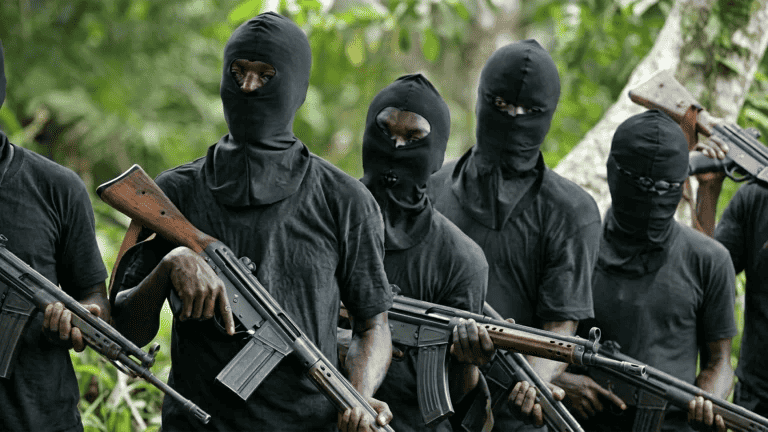
A six-year investigation by the Observatory for Religious Freedom in Africa has linked 79,323 deaths and 34,773 civilian abductions in Nigeria to terrorism-related violence, warning that the country is incubating a largely unrecognised terror network.
The report, titled Four Times Boko Haram? How the World Misreads Nigeria’s Violence, draws on a bespoke database that tracks up to 60 data points for each incident, using field research, local partners, academic institutions, media and NGO reports, as well as verified social media content.
Researchers found that between 2020 and 2025, Nigeria experienced an average of seven attacks and 36 deaths every day. Of the 79,323 people killed, 42,033 were civilians, while 37,290 were members of security forces or armed groups.
The findings challenge the dominant narrative that Boko Haram and the Islamic State West Africa Province are the main drivers of bloodshed. According to the data, the two jihadist factions were responsible for only 12 per cent of civilian killings, with Boko Haram accounting for eight per cent and ISWAP four per cent.
By contrast, armed groups categorised as Fulani Terror Groups were linked to 44 per cent of all civilian deaths, an estimated 18,577 people. ORFA stresses that it distinguishes sharply between these militias and the wider Fulani population, the vast majority of whom are not involved in violence.
Senior Research Analyst Frans Vierhout said the pattern emerging from years of data collection could no longer be dismissed. He argued that international focus on Boko Haram obscures the scale and nature of attacks on rural communities, particularly farming settlements subjected to raids, abductions, rape and the destruction of property.
The report also documents a stark religious dimension. ORFA estimates that 28,551 Christians and 13,224 Muslims were killed during the period. When adjusted for state populations, Christians in affected states were killed at 4.4 times the rate of Muslims.
Abductions show a similar divide. Of the 34,773 civilians kidnapped, 15,932 were Christians and 15,272 Muslims. Yet survivor testimonies suggest that Christian captives typically faced higher ransom demands, harsher treatment, a greater likelihood of execution and, for women, a higher risk of sexual violence.
Researcher Steven Kefas, author of Captivity by Creed: The Religious Sorting System Nobody Talks About, said interviews across multiple states and armed groups revealed a consistent hierarchy of human worth. He argued that any strategy to tackle Nigeria’s insecurity will remain incomplete unless policymakers confront both the scale of rural terror and its religious targeting.