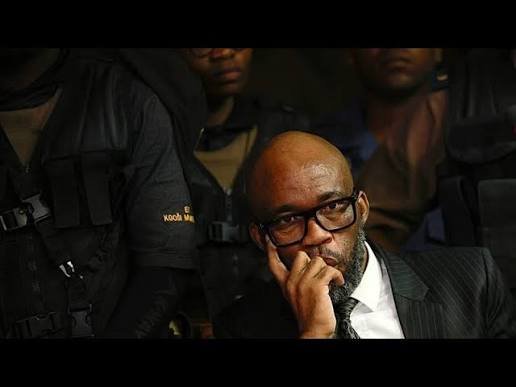
South Africa’s bid to prosecute one of its most high-profile police corruption cases has been thrown into uncertainty after businessman Vusimuzi “Cat” Matlala abruptly walked away from a plea bargain that was set to turn him into a star state witness.
The Pretoria Specialised Commercial Crimes Court scrapped the agreement after Matlala refused to accept a 12-year prison term proposed by the court. Prosecutors had struck a deal for an effective eight-year sentence in exchange for his guilty plea and full cooperation, but the court signalled that the punishment was too lenient for the scale of the alleged crimes.
Matlala is accused of fraud, corruption and money laundering arising from the allegedly irregular award of a 228-million-rand South African Police Service tender to his company, Medicare24. The contract, investigators say, was tainted by inflated pricing and improper influence, and forms part of a broader probe into how senior police officials allegedly steered lucrative deals to favoured suppliers.
Under the now-defunct plea deal, Matlala had admitted guilt and was poised to testify against several co-accused, including high-ranking officers. His evidence was expected to illuminate how the tender was structured, who benefited and how money is believed to have flowed through a network of front companies and intermediaries.
The National Prosecuting Authority has confirmed that, with the agreement voided, none of the admissions or details contained in Matlala’s plea statement or affidavit can be used in court. Investigators must now rely on documentary records, financial analysis and other witnesses to rebuild aspects of the case that would have been bolstered by his insider account.
Legal analysts say the collapse of the deal is a serious, though not fatal, setback for the state. Plea bargains are a central tool in complex corruption prosecutions, where insiders can unlock opaque financial schemes and implicate powerful figures who rarely leave a direct paper trail.
Prosecutors insist they still have sufficient evidence to proceed and have framed the development as a tactical adjustment rather than a defeat. Matlala and his co-accused remain in custody and are expected to stand trial together when the matter returns to court, where the state will attempt to prove the corruption case without the cooperation it once thought was secured.




.jpeg?alt=media&token=96b327a5-8e62-4ed1-a078-308aff149ed1)