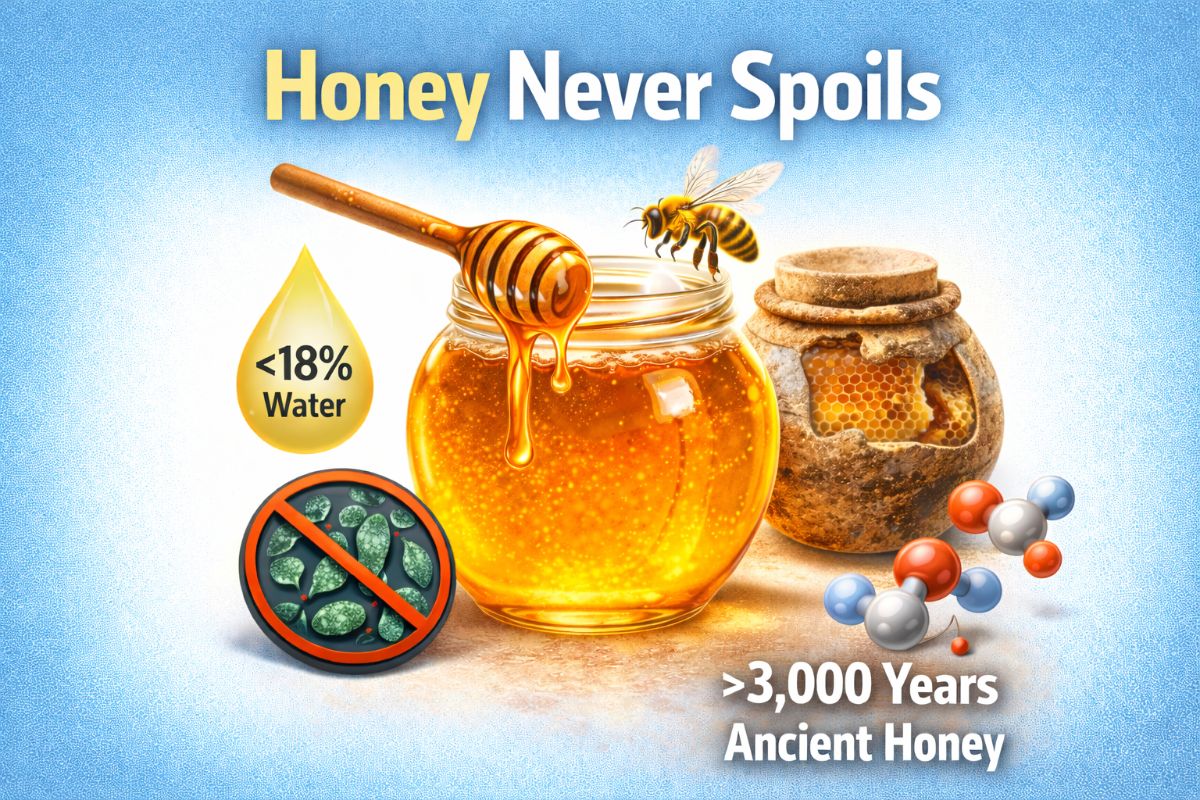
Honey is a sweet, golden liquid produced by bees from the nectar of flowers. Known for its long-standing use as both a food and a medicine, honey has a unique property that sets it apart from most other foods: it never spoils. Archaeologists have found pots of honey in ancient Egyptian tombs that are over 3,000 years old and still perfectly edible. But how is it that honey can remain good for so long, and what makes it different from other food items?
In this article, we’ll explore the science behind honey’s ability to never spoil, its natural preservation properties, and why this fascinating food has earned its reputation for being eternal.
Natural Composition of Honey
The secret to honey's long shelf life lies in its natural composition. Honey is primarily made up of sugar, with the main sugars being glucose and fructose. It also contains small amounts of water, minerals, vitamins, and enzymes. However, honey is incredibly low in moisture, typically around 17-18% water. This low water content is key to preventing the growth of microorganisms like bacteria and fungi, which need moisture to thrive. Additionally, honey has a high concentration of sugar (mainly glucose and fructose), which further contributes to its longevity. The sugars in honey create a hyperosmotic environment, meaning that the high sugar concentration effectively draws water out of any potential bacterial or fungal cells, dehydrating them and preventing growth.
Acidity of Honey
Honey is naturally acidic, with a pH that typically ranges from 3.2 to 4.5. This acidity makes it inhospitable to most microorganisms, particularly bacteria, which prefer more neutral environments to thrive. The acidic nature of honey acts as an additional preservative, preventing the growth of harmful bacteria and other pathogens that could cause spoilage in other foods.
Hydrogen Peroxide Production
One of the key reasons honey never spoils is the presence of an enzyme called glucose oxidase. This enzyme is introduced by bees during the honey-making process, and when honey is exposed to small amounts of water (for example, during the process of digestion), it produces hydrogen peroxide. Hydrogen peroxide has strong antimicrobial properties and works to inhibit the growth of bacteria and fungi in honey, further preventing spoilage. Interestingly, this hydrogen peroxide is released in a slow and controlled manner, ensuring that honey remains safe to eat for an indefinite period without turning rancid or unsafe.
Bees’ Role in Honey Preservation
Bees play an essential part in ensuring that honey is preserved. When bees create honey, they do so by repeatedly evaporating the water from the nectar through a process known as ripening. As bees fan their wings, they help to reduce the moisture content of the nectar, which eventually turns into thick, concentrated honey. The final product is almost entirely devoid of water, creating an inhospitable environment for bacteria and other microorganisms.
Moreover, once the honey is sealed in the honeycomb, it is virtually airtight. The bees will then cap the honeycomb with a layer of wax, which serves as a natural barrier to air and contaminants. This process of sealing the honeycomb helps preserve honey over long periods.
Honey’s Longevity in Ancient Tombs
One of the most fascinating aspects of honey is its ability to remain edible even after thousands of years. Archaeologists have discovered pots of honey in ancient Egyptian tombs that are over 3,000 years old. Despite the passing centuries, the honey was still perfectly preserved and safe to eat. How is this possible?
As long as honey is stored in an airtight container, in a cool and dry environment, it remains sealed off from the elements, and the natural preservatives within it (such as low moisture content, acidity, and hydrogen peroxide) keep the honey in a stable, non-perishable state. This is why honey found in ancient tombs, sealed away for millennia, still retains its original properties.
Why Honey Can Become Crystallized but Not Spoiled
Over time, honey can undergo a process known as crystallization. This is when the sugars in honey, particularly glucose, begin to form solid crystals. Crystallization is a natural process that occurs when honey is stored at cooler temperatures. While crystallized honey may look different, it’s still perfectly safe to eat. In fact, some people prefer crystallized honey because of its spreadable texture.
Crystallization does not mean that honey has spoiled; it’s simply a result of temperature changes. If you find that your honey has crystallized, you can easily return it to its liquid state by gently warming it in a pot of hot water.
Storage Tips to Maintain Honey’s Longevity
To ensure that honey remains edible for a long time, it's important to store it correctly:
Keep honey in a tightly sealed container: This prevents moisture from entering the jar and keeps the honey free from contaminants. Store honey in a cool, dry place: Avoid placing honey in areas with high humidity, as moisture can lead to fermentation or spoilage. When using honey, always use a clean utensil to scoop it out, as introducing bacteria or other microorganisms can cause honey to spoil over time.
Health Benefits of Honey
Apart from being a natural preservative, honey also offers several health benefits. It is known for its antimicrobial properties, making it useful in wound healing and as a remedy for sore throats and coughs. Honey also contains antioxidants, which help to protect the body from oxidative stress and reduce the risk of chronic diseases. Additionally, honey can act as a prebiotic, helping to promote the growth of beneficial bacteria in the gut.
Honey’s ability to never spoil is a remarkable feat of nature.