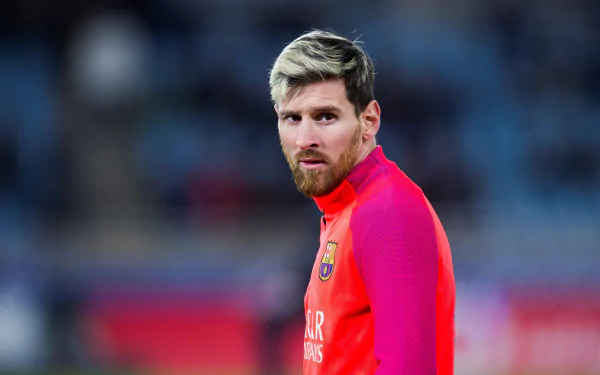
It is both ironic and telling that Joan Laporta, the president of FC Barcelona, would label the idea of Lionel Messi returning to the club as “unrealistic.” This statement comes after Messi’s recent appearance at Camp Nou, where he openly expressed his desire to return, not merely for a farewell but to rejoin a club that shaped his extraordinary career. If anything, it highlights a disconnect between the club's leadership and its legendary player's emotional ties to it.
Messi's visit to Camp Nou, where he conveyed heartfelt sentiments to fans, was a clear reflection of his longing for a place he called home for two decades. The fact that Laporta would dismiss this yearning as unrealistic raises questions about his understanding of the emotional dynamics at play. How can he, who was at the helm during Messi’s departure, so readily dismiss the possibility of a reconciliation? One could argue that this reveals an ego-driven decision-making process that prioritizes financial stability over emotional connections, ultimately undermining the club's legacy.
Laporta claims it's “not fair” to speculate on Messi's return, but isn’t it rather unfair to downplay the emotional bond between Messi and the club? Instead of recognizing the potential for a unifying chapter in their storied relationship, he seems intent on quelling any hope that fans,or Messi himself,might harbor. His insistence that “Barca is above everything” comes off as both defensive and dismissive, suggesting a willingness to sacrifice the legacy of one of football's greatest figures for the sake of financial prudence.
The president’s suggestion of organizing a tribute match for Messi’s illustrious career is a nice gesture, but let’s not kid ourselves: it feels more like an attempt to placate both Messi and the fans than a genuine acknowledgment of his impact. Laporta’s words about wanting the “best tribute match in the world” come across as hollow when juxtaposed with his outright rejection of Messi's potential return. Shouldn't the best tribute include the legend actively participating, rather than merely commemorating his past?
Characterizing Messi’s visit as a "spontaneous" display of affection for the club further exemplifies Laporta's tendency to downplay the broader implications of this reunion. Such language trivializes what is evidently a significant moment for both Messi and the supporters who continue to cherish his legacy. It’s not merely a visit; it’s a reminder of what was lost,a partnership that transcended football.
As Messi continues to shine for Inter Miami FC, his presence in Barcelona has rekindled discussions about not just his legacy but also the future of an organization that seems to have lost its way. The world of football watches closely, and as fans ponder the outcome, one must question whether Laporta’s rigid stance is truly in the club's best interest or merely a protective façade for his own leadership choices.
In the end, the narrative between Messi and Barcelona seems to be less about the player and more about the management’s unwillingness to embrace a future that includes reconciliation. If Laporta genuinely respects Messi as he claims, he must reflect on the broader implications of his statements and decisions,before it’s too late.