The Shadow of Corruption: A Story About Nigeria
Nigeria is a country blessed with abundant natural resources, talented people, fertile land, and a rich cultural heritage. From the busy streets of Lagos to the peaceful communities in the north, from the Niger Delta to the eastern and central parts of the country, Nigerians are known for their resilience and determination. Yet, despite these blessings, one problem continues to affect the country's development: corruption.
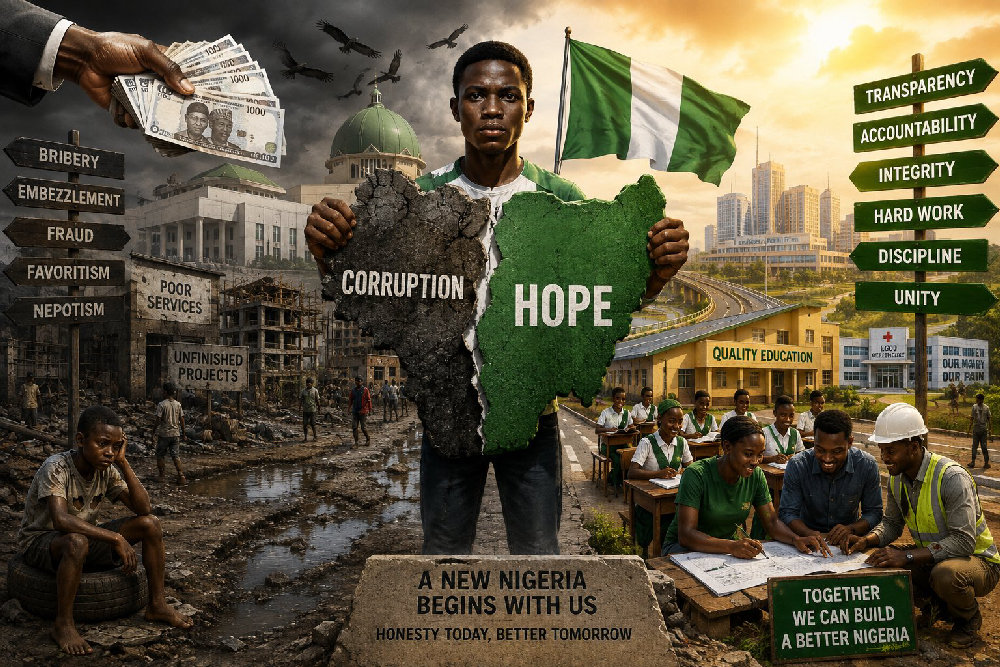
Corruption is the dishonest or illegal use of power, position, or public resources for personal benefit. In Nigeria, it can take different forms, including bribery, embezzlement, favoritism, fraud, and misuse of public funds. Although corruption is often associated with government officials, it can occur in different areas of society. It may involve an official demanding money before performing a legitimate duty, a person offering a bribe to receive special treatment, or someone misusing resources entrusted to them.
The effects of corruption can be seen in everyday life. Imagine a community where the government announces that a new health centre will be built. The people become excited because they believe they will finally have better access to healthcare. Money is allocated for the project, but instead of the entire amount being used for construction and equipment, some of it disappears through dishonest practices. The building may remain unfinished, or the centre may be completed without the necessary facilities.
Months pass, and the people continue to travel long distances whenever they need medical attention. Parents worry about their children, elderly people struggle to receive treatment, and health workers complain about inadequate equipment. The people may not immediately see the connection between their difficulties and corruption, but the connection is there. When public resources are stolen or mismanaged, ordinary citizens suffer the consequences.
Education can also be affected. A government may allocate money for schools, textbooks, laboratories, classrooms, and other educational facilities. If the funds are not properly used, students may find themselves learning in overcrowded classrooms or without adequate learning materials. Teachers may also face difficult working conditions. In the long run, poor investment in education affects the development of young people and the future of the country.
Corruption can also affect roads and other infrastructure. A road project may be awarded and money provided for quality construction, but dishonest practices can lead to poor materials being used or the project being abandoned. When roads deteriorate quickly, transportation becomes difficult and businesses suffer. Farmers may find it harder to transport their produce to markets, while commuters spend more time and money travelling.
One of the most painful aspects of corruption is that it can create inequality. Public resources are meant to serve the people, but corruption can divert those resources toward individuals who already have power or wealth. As a result, people who genuinely need government services may be left behind.
Corruption can also damage people's trust in institutions. When citizens repeatedly hear about scandals involving public money, they may begin to believe that government institutions cannot be trusted. This loss of trust can make it difficult for citizens and leaders to work together. People may become discouraged from participating in community and national development because they feel their efforts will not make a difference.
However, corruption is not a problem that Nigerians must simply accept as part of life. Fighting corruption requires collective responsibility. Government institutions must enforce laws fairly and hold offenders accountable. Public officials should be transparent about how public funds are spent. Citizens should also reject the idea that bribery and dishonesty are normal or necessary.
Young people have an important role to play in creating a better Nigeria. The values learned today can influence the kind of leaders and citizens they become tomorrow. Students can practise honesty in examinations, assignments, elections, and everyday interactions. They can also learn to question wrongdoing responsibly and support fairness.
The media has an important responsibility as well. Journalists can investigate and report cases of corruption, inform citizens about government activities, and give people a platform to demand accountability. However, journalism must be guided by accuracy, fairness, and responsible reporting.
Technology can also help promote transparency. Digital systems can reduce unnecessary human interference in some government processes and make information easier to access. When citizens can track projects and public spending, it becomes more difficult for resources to disappear without explanation.
Ultimately, corruption is not only about money. It is about trust, responsibility, and the future of society. Every time public resources are misused, an opportunity to improve someone's life may be lost. Every time a bribe is demanded or offered, fairness is weakened. Every time dishonesty is celebrated, the values needed to build a strong society are threatened.
Nigeria's story, however, should not be defined by corruption alone. The country has millions of hardworking, honest, creative, and determined citizens. Nigerians continue to build businesses, educate children, create innovations, serve their communities, and contribute to national development despite many challenges.
In conclusion, corruption is not only a financial problem but also a problem of trust, responsibility, and national development. Nigeria's future depends on responsible leadership, honest citizens, strong institutions, responsible journalism, and young people who value integrity. A better Nigeria can be built when everyone takes responsibility for fighting corruption.
3
1