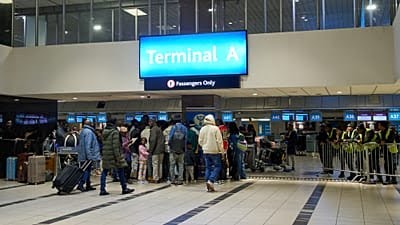
Suitcases, plastic-wrapped bundles and weary faces crowded the departure hall at Johannesburg’s main airport as hundreds of Nigerian nationals queued for flights home, choosing uncertainty in Nigeria over the mounting hostility they say they face in South Africa.
For weeks, vigilante-style groups armed with sticks, whips and makeshift shields have marched through townships and inner-city streets, demanding that undocumented foreigners leave. Videos shared online show door-to-door checks, with residents ordered to produce passports or work permits on the spot.
You are walking on the streets and a fellow citizen can stop you and ask for your papers, said Ninikanwa Okey-Uche, Nigeria’s Consul General in South Africa. People have been harmed, businesses have been looted, so basically the opportunity has been presented, come home.
Among those boarding the planes was trader Ona Charles, who said he had spent 14 years trying to build a life in South Africa. The experience that I have here in South Africa is terrible, he said. I am 14 years here in South Africa since going up and down, up and down, not stable. So I rather give up for me to go home with my life than going home with injuries.
South Africa has long been a magnet for migrants from across the continent, drawn by its relative wealth and the promise of work. Yet the same economic pressures that once made it a destination are now fuelling resentment. With unemployment above 30 percent and youth joblessness far higher, anti-migrant groups accuse foreigners of taking scarce jobs, undercutting wages and straining housing, health and education systems.
This is not the first time such anger has turned violent. In 2008, more than 60 people were killed in what rights groups described as xenophobic attacks targeting African and Asian migrants. Sporadic riots, looting and intimidation have erupted repeatedly since, often flaring in poor neighbourhoods where competition for work and services is most acute.
South African immigration officials say those accepting repatriation will face tough consequences if they try to return. We put them on a stop list, so they will all be declared what we call undesirable, one official explained, citing provisions in the immigration act. When we declare them undesirable, obviously it will be about a five year ban before they can come back to South Africa.
For many Nigerians leaving, that ban is a price they are willing to pay for a chance to start again, far from a country they once saw as a refuge but now experience as a threat.